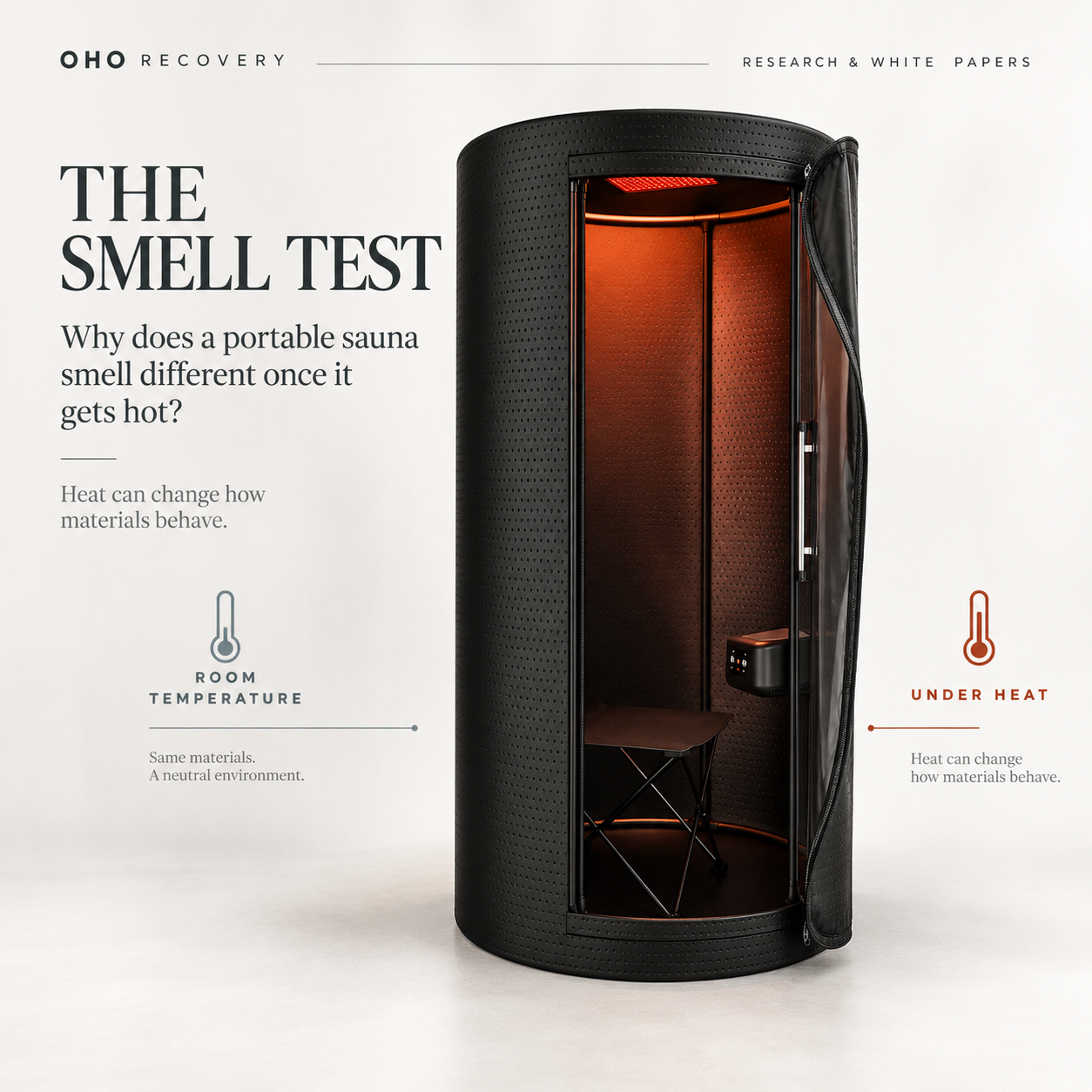
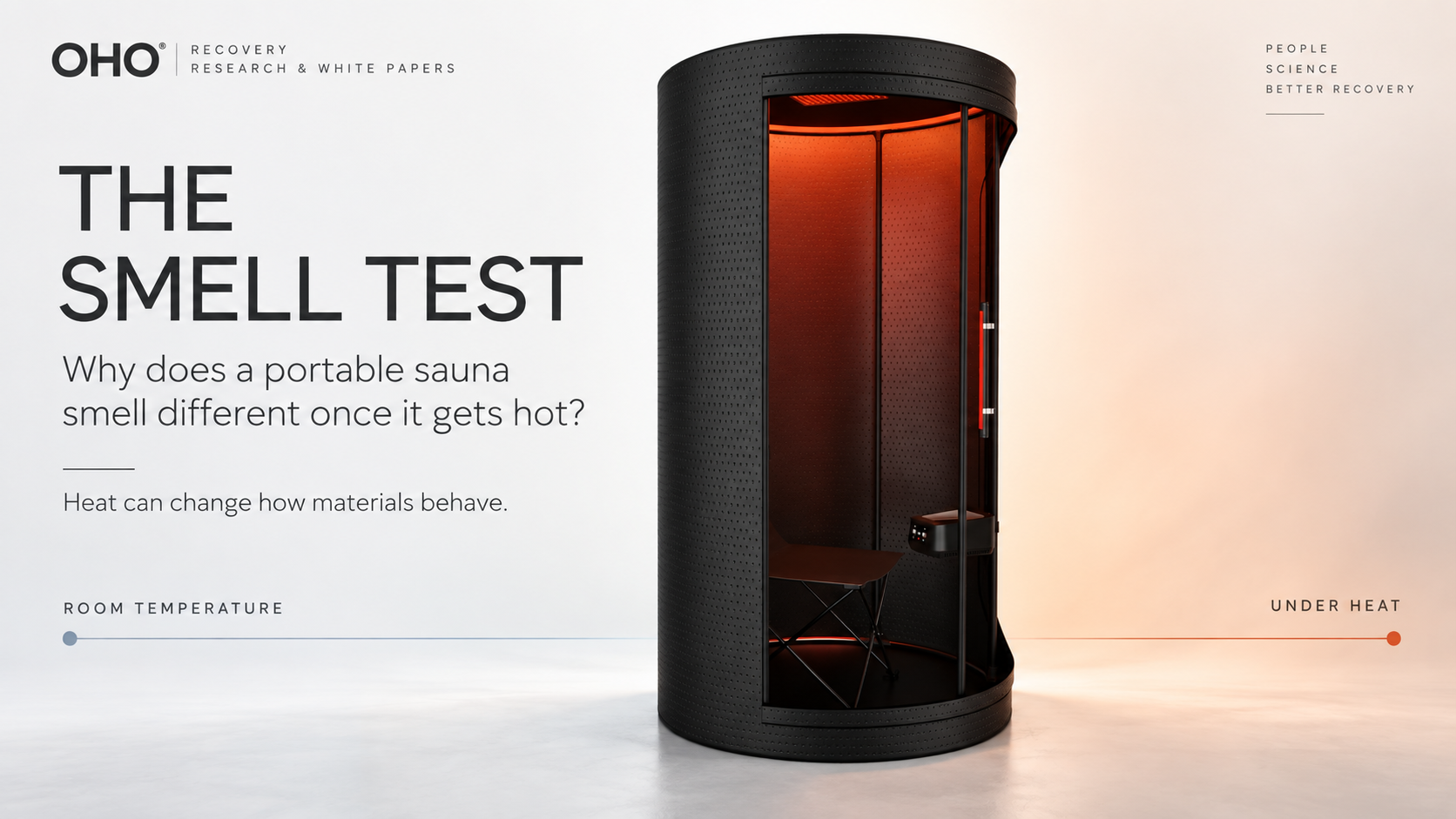
Open a new portable sauna at room temperature and everything may seem normal.
Turn on the heater, wait twenty or thirty minutes, and suddenly there is a smell that was not obvious before.
Sometimes it is faint and temporary.
Sometimes it is stronger.
Sometimes two sauna tents made with apparently similar fabrics smell noticeably different under heat.
The natural question is:
What changed?
Usually, the answer is not simply “the fabric.”
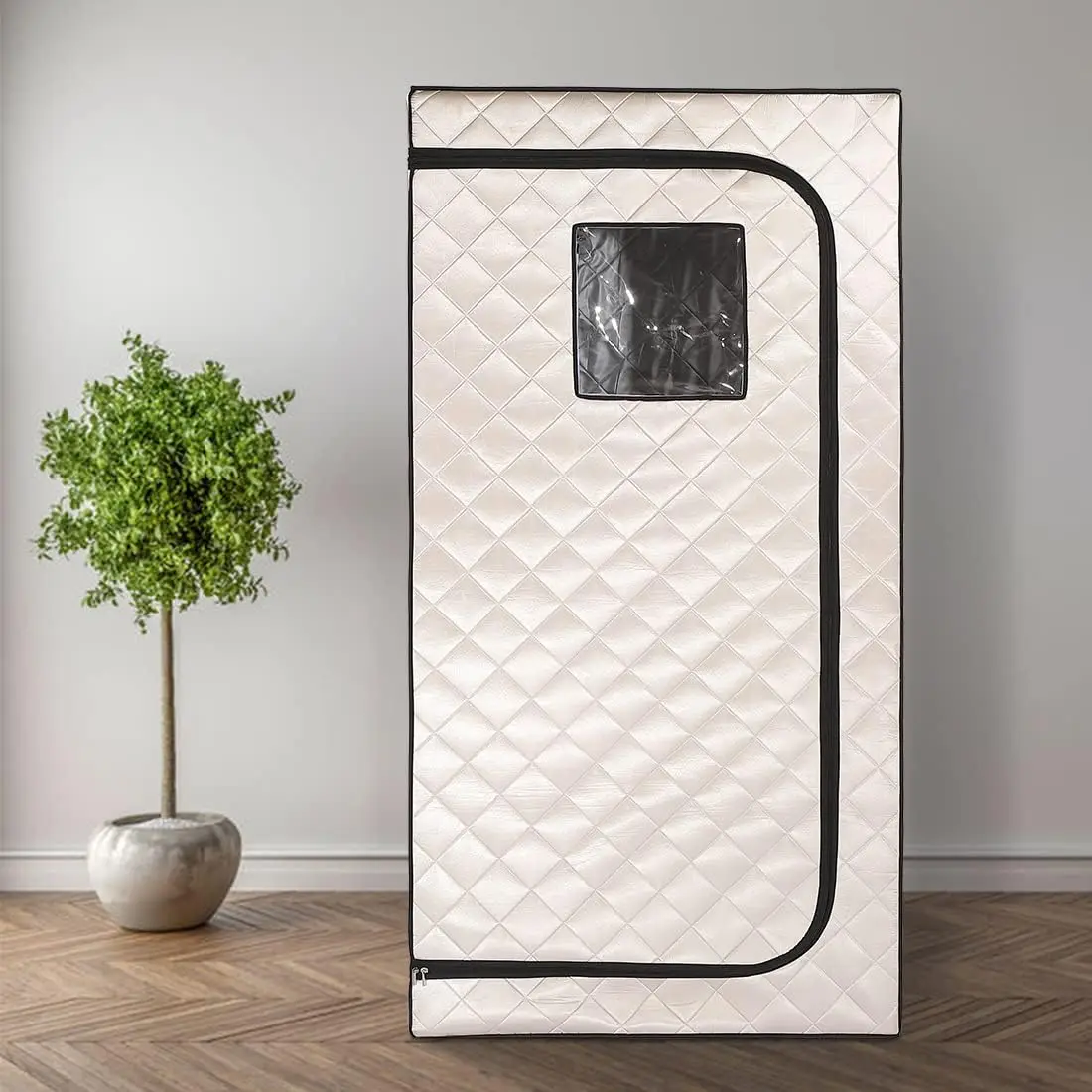
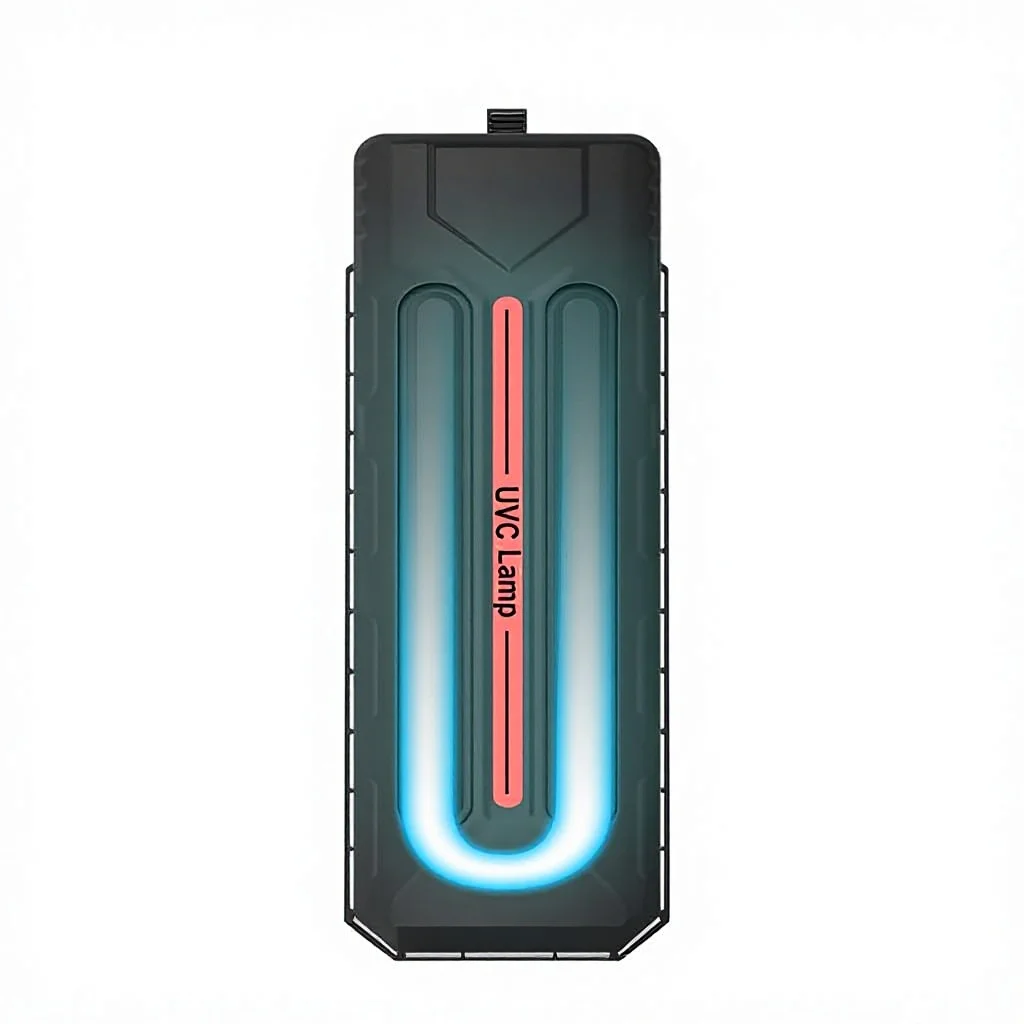
A portable sauna is a heated enclosure made from multiple materials: textile, coatings, insulation, clear windows, adhesives, thread, zippers, printing, wiring, plastic parts and heating hardware.
Once temperature rises, all of these materials are being used under conditions very different from a room-temperature sample table.
That is why odor should be treated as a system-level product question, not just a fabric question.
And there is another important distinction:
Smell can tell us that something is being detected. It cannot, by itself, tell us whether that material is safe or unsafe.
That difference matters.
Many materials contain substances that can move from the material into the surrounding air.
Some are naturally present in the material. Others may come from dyeing, printing, finishing, adhesives, coatings or manufacturing processes.
As temperature increases, the release of many volatile compounds can increase.
The effect is particularly noticeable in a portable sauna because the product is a relatively small enclosure.
A small amount of emission that might be difficult to notice in an open factory or warehouse may become easier to detect inside a warm enclosed space.
The U.S. EPA notes that volatile organic compounds, or VOCs, can be released from many materials and products, and that elevated temperature can increase concentrations of some indoor pollutants.
But that still does not tell us exactly what we are smelling.
To understand that, it helps to look at the complete product.
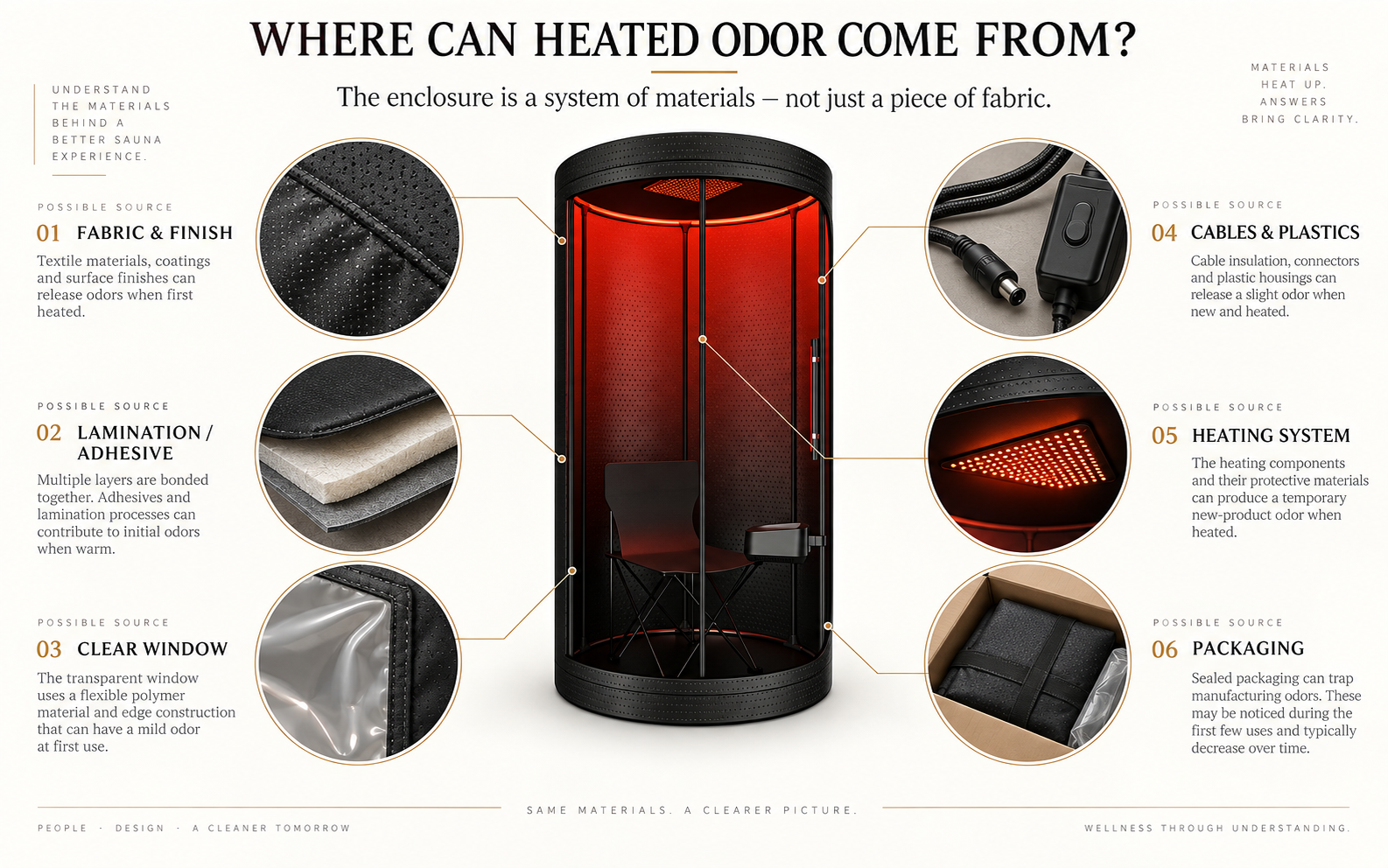
When people discuss sauna material safety, the conversation often begins with the fabric:
Cotton or polyester?
Oxford or canvas?
Natural or synthetic?
Those questions matter.
But fiber composition is only part of the story.
A textile may also go through:
Some textile finishing systems can involve formaldehyde-based resins or other process chemicals. EPA documentation, for example, identifies formaldehyde-based resins as one of the materials historically used in textile finishing to provide properties such as crease resistance or assist with dye fixation.
That does not mean every textile contains problematic levels of formaldehyde.
It means that simply knowing:
“This fabric is cotton.”
does not tell you everything about how that finished textile will behave under heat.
The real product is not raw cotton fiber.
It is the finished fabric.
Portable sauna walls are often more complicated than they appear from the outside.
A fabric may be combined with:
Those layers need to be joined somehow.
Depending on the construction, that may involve:
This means two sauna tents that both advertise the same outer fabric can behave differently once heated because the construction behind the fabric is different.
A low-odor face fabric paired with an unsuitable adhesive can still produce an unpleasant heated enclosure.
Conversely, a well-selected multi-layer structure may perform cleanly even though it contains synthetic materials.
This is why judging a sauna material only by the visible outer layer can be misleading.
Portable sauna windows are usually made from flexible transparent polymer rather than glass.
That is necessary because the enclosure needs to fold, pack and move.
But the window is still part of the heated interior surface.
Its behavior depends on factors such as:
The same applies to:
A sauna enclosure may be described as “100% cotton,” for example, while still containing several non-cotton components inside the heated environment.
That is not automatically a problem.
It simply means the safety discussion needs to evaluate the complete product, not one marketing headline.
Not every heated odor starts with the textile enclosure.
New heaters may carry small amounts of:
Airflow can then distribute that odor throughout the sauna.
Hot-air heaters also move air continuously, which makes any odor generated around the heating system easier to notice.
A useful troubleshooting step during product development is therefore to test:
the enclosure alone,
and:
the heater alone,
before testing the complete system.
This simple separation can reveal whether the main source is associated with the textile system or the electrical/heating hardware.
A portable sauna may spend weeks inside:
During that time, any volatile substances released by the product can accumulate inside the sealed packaging.
When the carton is first opened, the concentration around the product may therefore be higher than it would be after the product has been unpacked for some time.
Heat can make the first-use difference even more noticeable.
This helps explain why some products have a stronger smell during the first heating cycle and a much weaker smell later.
But there is an important caution here:
“The smell eventually disappears” is not a material-safety test.
Airing out or preheating may change odor intensity.
It does not prove that the original material selection was appropriate.
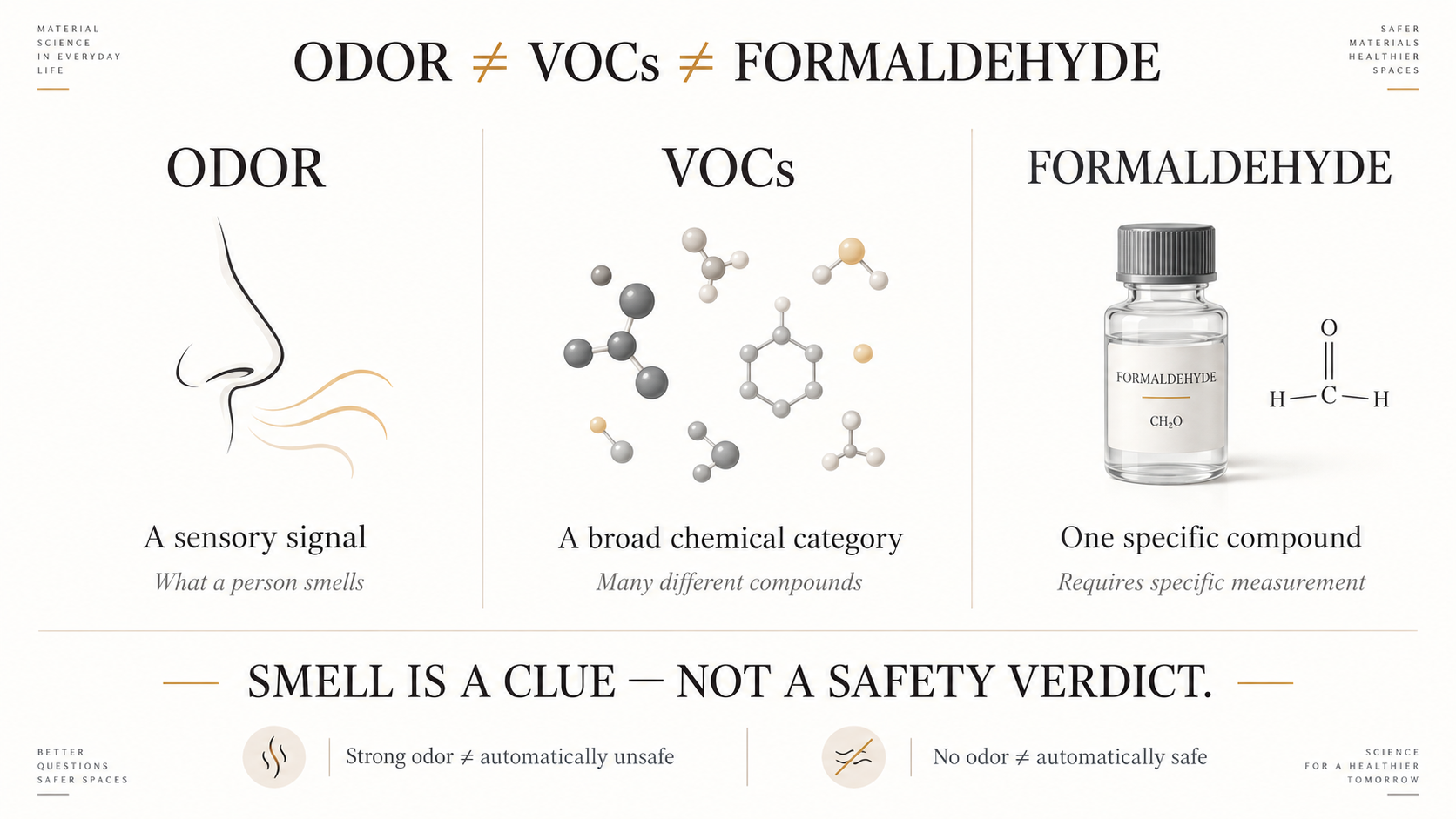
These three ideas often become mixed together.
They should not be.
Odor is a sensory response.
Something reaches the nose and a person perceives a smell.
People vary significantly in how sensitive they are to odors. ATSDR notes that some chemicals can be detected by smell at concentrations below levels expected to cause harmful effects, while sensitivity also differs from person to person.
So:
strong smell ≠ automatically toxic
and:
no smell ≠ automatically safe.
VOC stands for volatile organic compound.
It describes a broad category of organic compounds that can move into the air under normal environmental conditions.
Different VOCs have very different chemical properties and health profiles.
This is why a single TVOC number should be interpreted carefully.
EPA specifically notes that VOC measurement depends heavily on the test method and that a lower total VOC number does not automatically mean a product is safer, because the individual compounds making up that total can differ greatly.
Formaldehyde is one specific chemical.
It may be associated with some:
It therefore needs to be measured specifically rather than assumed from a generic TVOC reading. EPA's current formaldehyde documentation continues to identify textiles, resins, glues, plastics and adhesives among relevant uses.
This distinction is important.
A handheld meter showing “TVOC” is not the same thing as a formaldehyde-specific laboratory test.
Cotton is attractive in portable sauna design for understandable reasons.
It can provide:
But “100% cotton” does not tell us everything about the finished product.
Cotton can still be:
The same principle applies in the opposite direction.
A synthetic material should not automatically be classified as unsafe simply because it is synthetic.
The more useful question is:
What is the actual material system, what substances are present, and how does the finished system behave at its real operating temperature?
That is a much stronger product-development question than:
“Natural or synthetic?”
A mild odor that becomes weaker after initial operation is different from an odor that:
Those situations should not simply be accepted as “normal new-product smell.”
The product should be stopped and investigated.
For development teams, the pattern of the odor is useful information.
Record:
when it begins, where it seems strongest, how temperature affects it and whether it changes across repeated heating cycles.
That information can help narrow the source before laboratory testing begins.
One of the biggest mistakes in heated-product development is to evaluate a material only under normal room conditions.
Imagine two fabric samples sitting on a desk.
Both look good.
Both smell acceptable.
Both pass basic incoming inspection.
But the final sauna may operate at a much higher temperature inside an enclosed space.
The meaningful question is therefore:
What happens when the finished material system is actually heated?
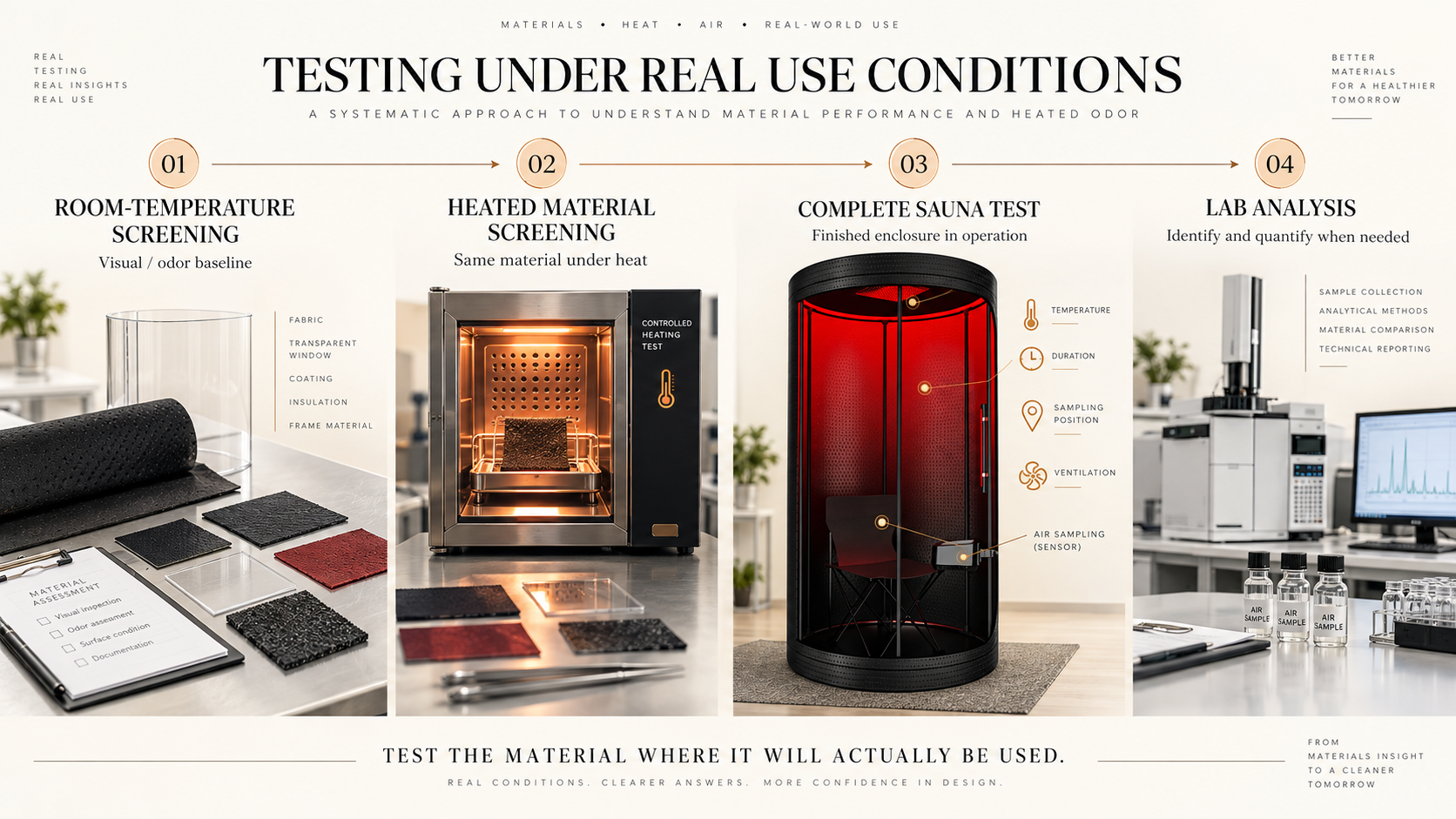
A useful evaluation can be built in layers:
| Evaluation Stage | What It Helps Answer |
|---|---|
| Material Documentation | What is the composition? What finishes, coatings or certifications are declared? |
| Room-Temperature Screening | Is there an obvious baseline odor or visible material issue? |
| Heated Material Screening | Does odor change significantly at operating temperature? |
| Component Separation | Is the likely source fabric, adhesive, window, heater or another component? |
| Complete-Sauna Heat Test | What does the user actually experience in the finished enclosure? |
| Laboratory Air Analysis | Which compounds are present and at what measured concentration? |
| Batch Verification | Does the same result remain consistent when production material changes batches? |
This is far more useful than asking a supplier one question:
“Does this fabric smell?”
Textile certifications can be very valuable.
For example, OEKO-TEX STANDARD 100 tests textile articles and their components against a large list of harmful substances, with requirements depending on the intended level of skin contact. Its criteria are also updated regularly; new 2026 requirements took effect in June.
But certification needs to be interpreted within its scope.
A certified fabric does not automatically answer every question about:
So the better approach is not:
“We have one certificate, therefore the entire system is proven.”
It is:
Use component certification as one layer of evidence, then evaluate the finished heated product as a system.
Portable air-quality meters can be useful during internal development.
They can help identify patterns such as:
Sample A consistently shows a larger change than Sample B.
or:
Readings increase when a particular component is heated.
That makes them useful screening tools.
But they should not automatically be treated as certification equipment.
Many compact meters cannot accurately identify every individual compound in a mixed heated environment, and sensor readings can be affected by other gases, humidity and calibration.
For formal product claims such as:
“Formaldehyde-free”
“Zero VOC”
“Non-toxic at high temperature”
a properly defined laboratory method and documented test conditions provide much stronger evidence.
A fabric supplier can provide an excellent test report.
An adhesive supplier can provide another.
A window supplier may provide a third.
All of those documents are useful.
But the consumer does not sit inside:
a roll of fabric.
They sit inside the finished sauna.
That finished product combines:
This is why whole-product heated testing becomes especially valuable for portable sauna development.
The test conditions should be documented clearly, including:
Without those conditions, even a precise-looking result can be difficult to compare.
Testing is important.
But the best time to solve an odor problem is before the final prototype.
Material selection can reduce unnecessary complexity from the beginning.
Useful development questions include:
Does this fabric need this particular finish?
Can two layers be joined without adding another adhesive system?
Is the clear window rated for the intended thermal environment?
Are high-temperature areas separated appropriately from polymer components?
Are manufacturing residues controlled before packing?
Does a supplier change its finish or adhesive between batches?
These questions are less visible than adding another feature to the product.
But they can have a much larger effect on how the sauna feels when a consumer turns it on for the first time.
The human nose is surprisingly useful.
It can tell us:
something changed when the product became hot.
That is valuable information.
But it cannot reliably tell us:
exactly which chemical is present,
how much is present,
or:
whether that concentration represents a safety concern.
That requires better evidence.
For portable sauna development, the strongest approach combines:
material understanding + heated-product testing + appropriate laboratory analysis + production consistency.
The goal should not simply be:
“Make the sauna smell like nothing.”
The better goal is:
Understand what materials are inside the heated environment, why they were selected, and how they behave under the conditions in which the product will actually be used.
That is the difference between choosing a material from a sample book and engineering a complete heated product.
Portable sauna materials have to solve several requirements at the same time.
They may need to support:
Odor and emissions are therefore not isolated from the rest of product development.
When developing a portable sauna program with OHO, material discussions can extend beyond the fiber name to the complete enclosure construction, heating configuration and intended operating conditions.
Because in a heated product, the question is not only:
“What is this material?”
It is also:
“What happens to this material when the product actually gets hot?”
No. Odor alone cannot determine toxicity. Some substances can be smelled at very low concentrations, while other substances may have little noticeable odor. Persistent, irritating or abnormal heated odor should, however, be investigated rather than dismissed.
No. Fiber composition alone does not describe dyes, finishes, printing, adhesives, laminated layers or other components used in the finished sauna.
No. TVOC represents a group measurement and does not identify every individual compound or its toxicity. Specific substances such as formaldehyde may require separate analytical methods.
Yes. It can provide valuable evidence regarding harmful substances in the certified textile article. However, the scope of the certificate should be checked, and it does not automatically evaluate every additional component in the finished heated sauna.

 EN
EN