Cold plunges are often marketed around one impressive number: how cold the water can get.
But once you look beyond the initial excitement of stepping into icy water, a different set of questions starts to matter.
Is the temperature easy to control? Is the tub comfortable to use? How do you keep the water clean between sessions? Does the equipment fit naturally into your home?
A cold plunge may look impressive on a product page, but its everyday practicality depends on much more than its lowest temperature.
If you're choosing a cold plunge for home use, or developing one for today's wellness market, here are the product details worth looking at more closely.
A very low water temperature may look impressive in a product specification. However, the lowest possible setting does not automatically make a cold plunge more practical.
Different users have different preferences, levels of experience and expectations. Some may prefer a milder cooling experience, while others may want a wider range of temperature settings.
This is where temperature control becomes important.
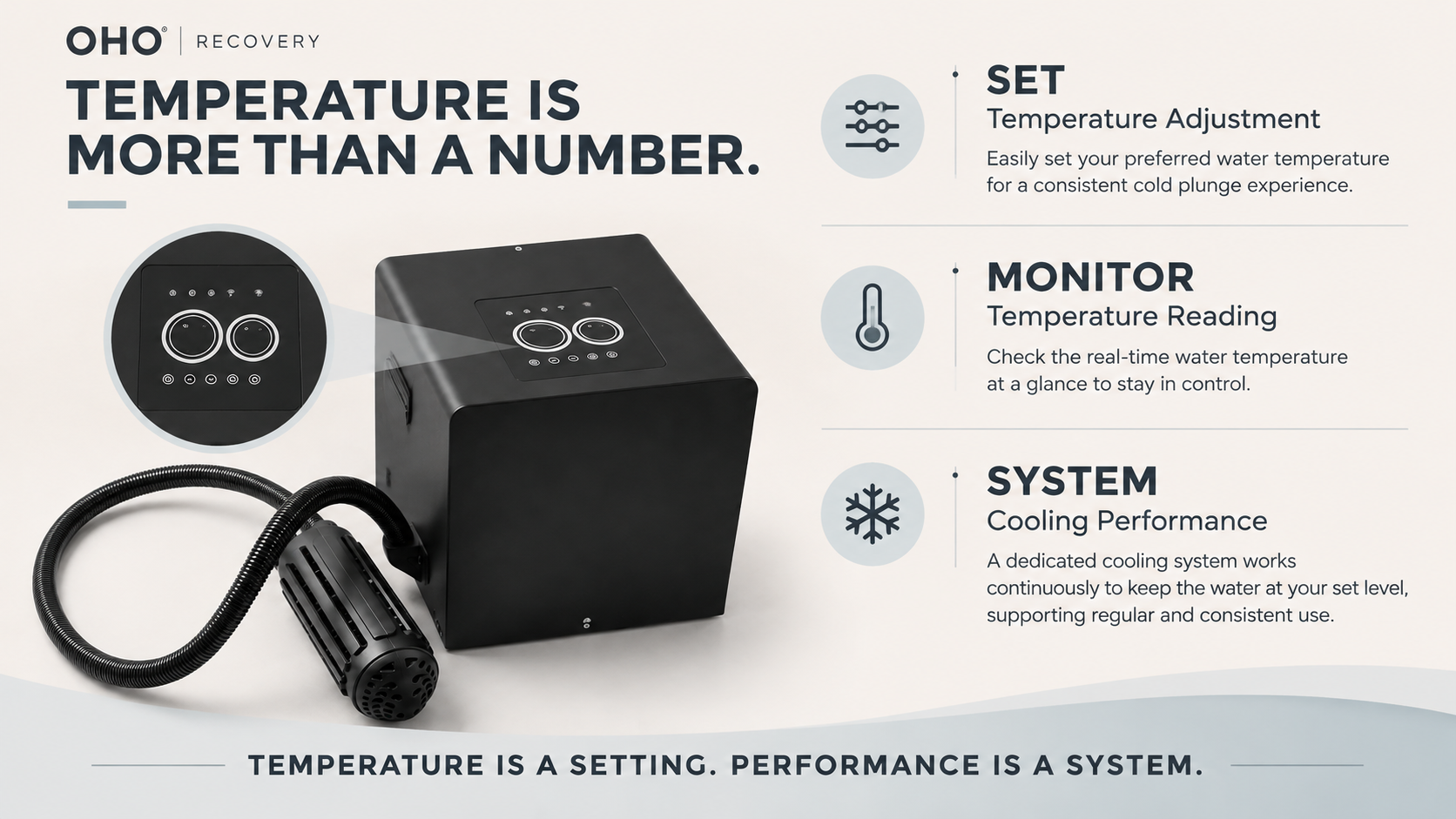
A well-designed cold plunge system should make it straightforward to adjust and monitor the water temperature. Clear controls, accessible settings and reliable temperature readings can make a noticeable difference to the overall experience.
It's also worth remembering that a chiller's performance does not depend on its cooling capacity alone. Water volume, starting temperature, ambient conditions, tub construction, insulation and circulation all influence the result.
In other words, the temperature displayed by a chiller is only one part of the bigger picture.
What to look for:
An understandable temperature control system.
A clearly stated operating temperature range.
Consistent and accessible temperature monitoring.
Performance information based on defined testing conditions.
A cold plunge can have an attractive exterior, but what really matters is how it feels to use.
Internal dimensions, depth, entry height and overall shape all influence the experience. A tub that looks spacious from the outside may offer a very different amount of usable interior space.
Consider a few practical details:
Interior dimensions
Can the user sit comfortably without feeling unnecessarily restricted? Is the depth suitable for the intended style of use?
Entry and exit
Is the opening easy to access? Is there enough surrounding space to get in and out without awkward movement?
Tub shape
A rectangular, oval or round tub can create quite different interior layouts. The right choice depends on the intended user, available space and product design.
These details may not always stand out in a product photograph, but they become much more noticeable during regular use.
A good cold plunge design should balance exterior dimensions with usable interior space.
The water may look perfectly clear when a cold plunge is first filled. But what happens after several uses?
Water management is one of the less glamorous parts of owning a cold plunge, yet it has a direct impact on the overall ownership experience.
A few components deserve attention:
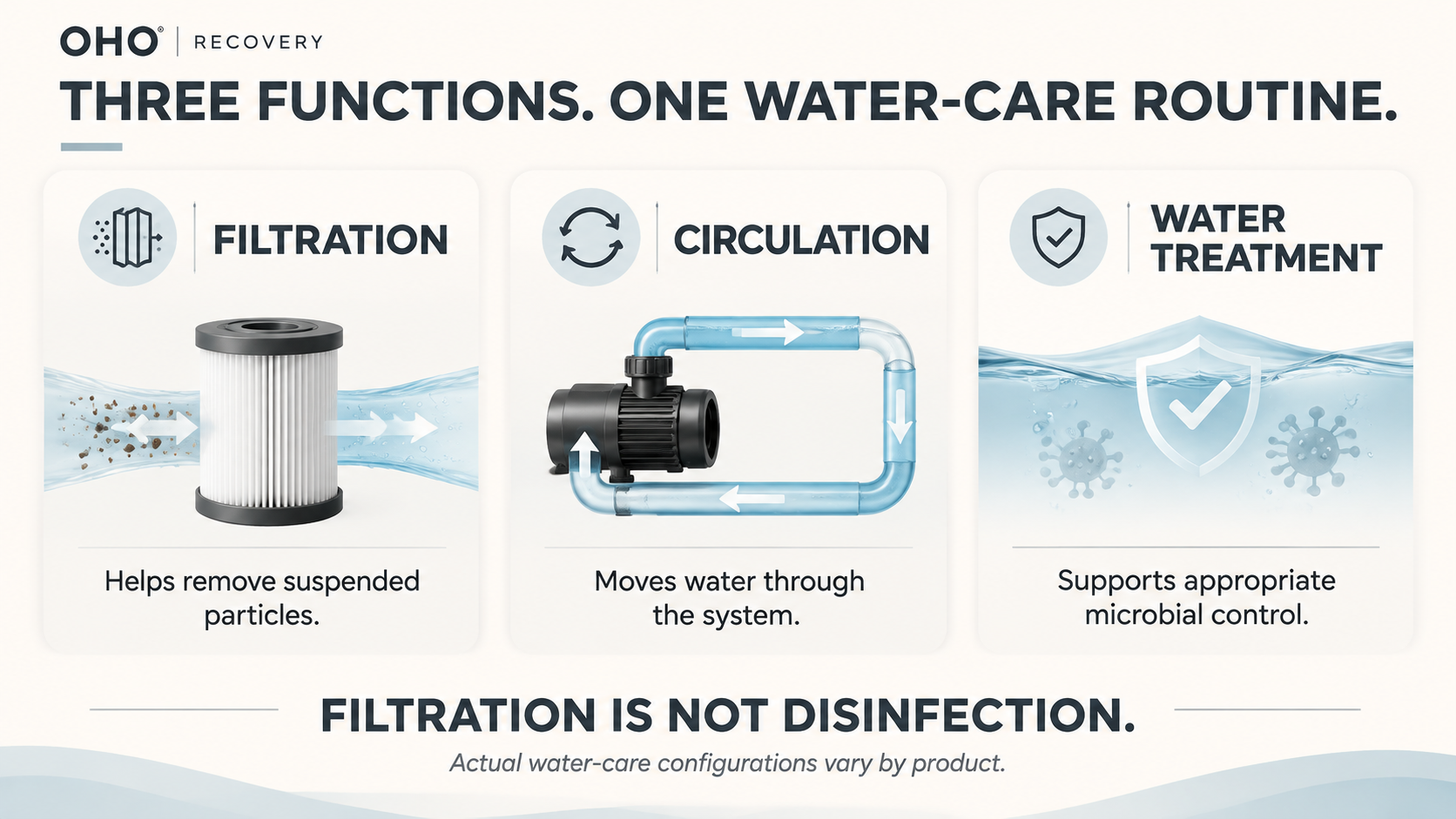
Filtration
A filtration system helps remove suspended particles and other debris from the water. Its effectiveness depends on the filter design, flow rate and maintenance.
Water circulation
Circulation helps move water through the system and can support more consistent temperature distribution. Poorly designed circulation may leave parts of the tub with different temperatures.
Water treatment
Filtration and disinfection are not the same thing. A filter does not automatically make water microbiologically safe. Appropriate water treatment, testing and maintenance are still important.
Covers and daily care
A suitable cover can help limit debris entering the tub and reduce exposure to the surrounding environment. Regular cleaning and following the manufacturer's water-care instructions remain essential.
The important point is simple: cold water is not automatically clean water.
When evaluating a cold plunge, consider not only how it cools the water, but also how the complete system supports ongoing water care.
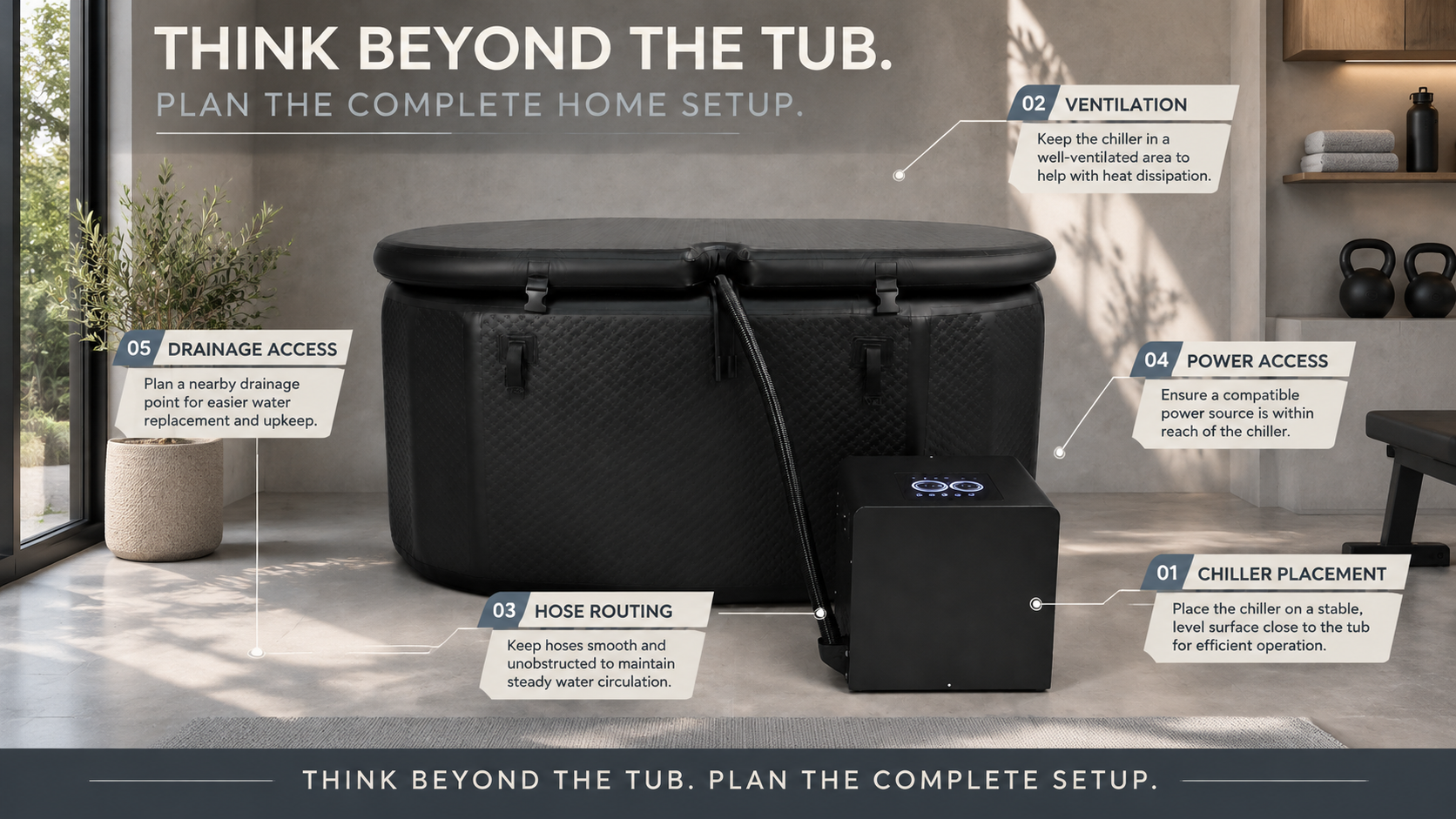
A home cold plunge should fit into the available space without creating unnecessary installation or maintenance challenges.
Before choosing a product, consider the entire setup rather than looking at the tub dimensions alone.
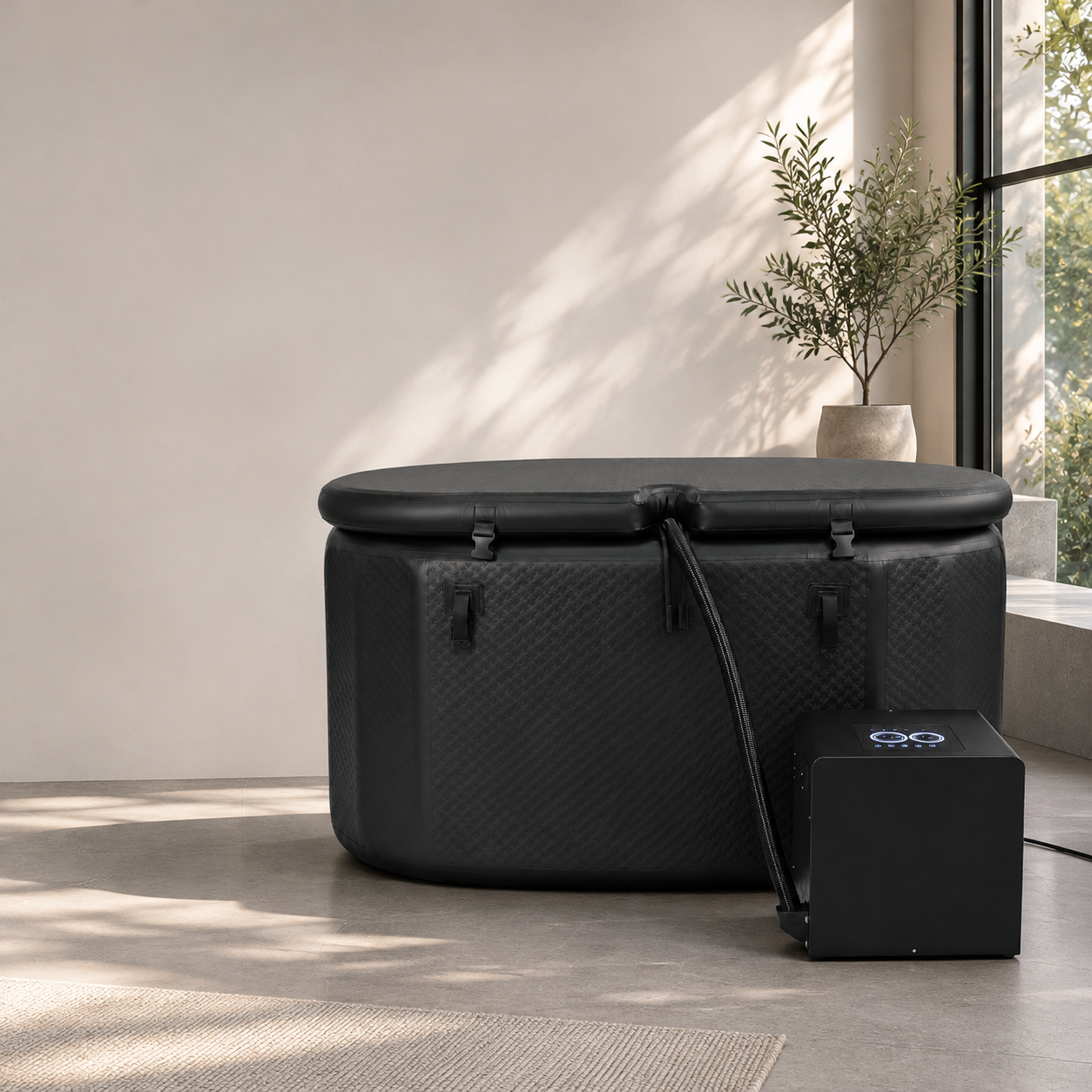
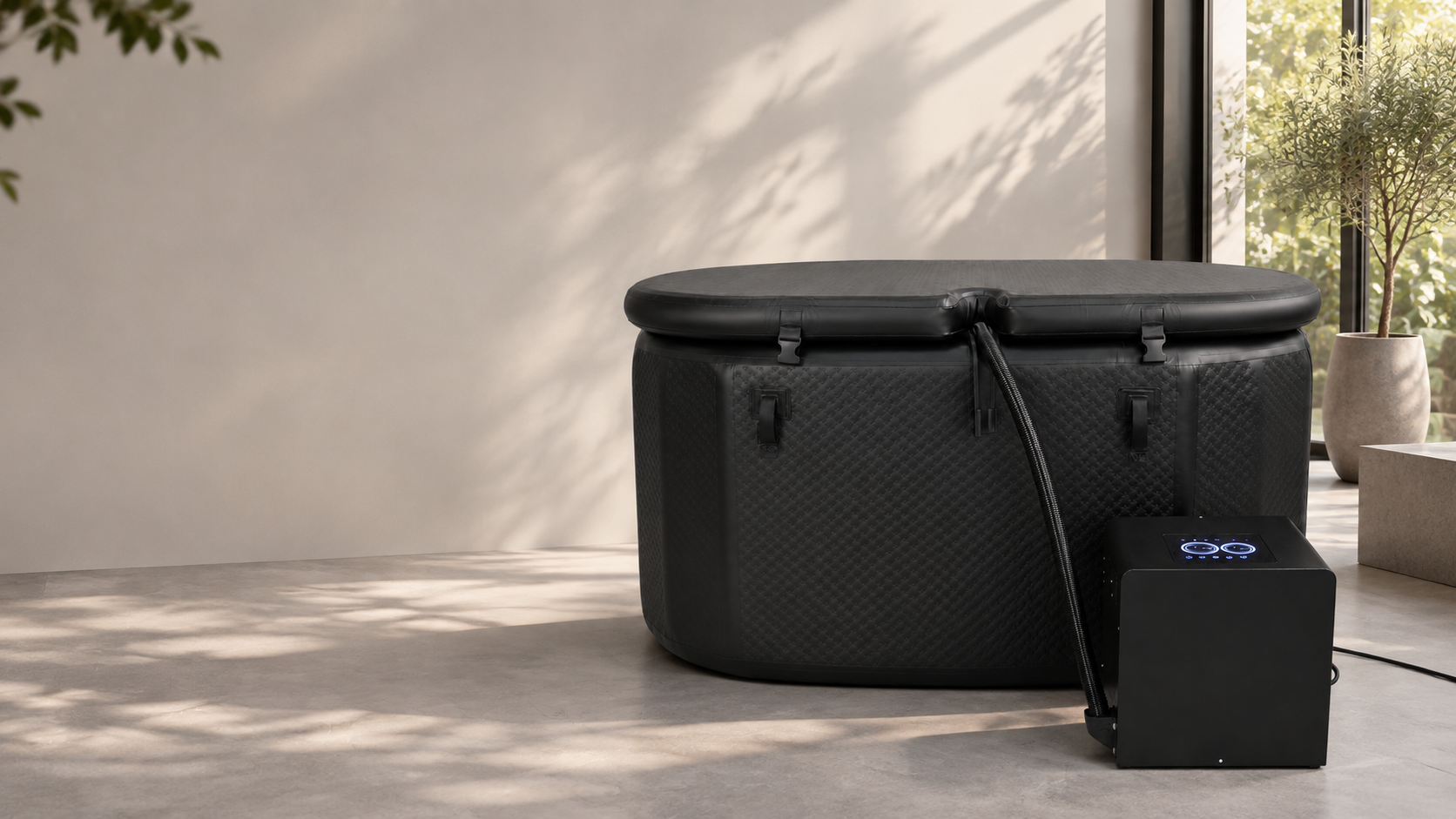
Space for the chiller
If the system uses an external chiller, it needs an appropriate location with sufficient ventilation and access for maintenance. The required clearance should follow the manufacturer's instructions.
Hoses and connections
Water inlet and outlet connections should be accessible and arranged in a way that makes installation and routine inspection manageable.
Filling and drainage
Think about where the water comes from and where it will go when the tub needs to be emptied. Drain access is particularly important in indoor installations.
Power and operating environment
Check the electrical requirements, available outlets and whether the intended indoor or outdoor location is suitable for the specific product.
A compact tub does not necessarily mean a compact installation. The chiller, connections, drainage and surrounding access space are all part of the real footprint.
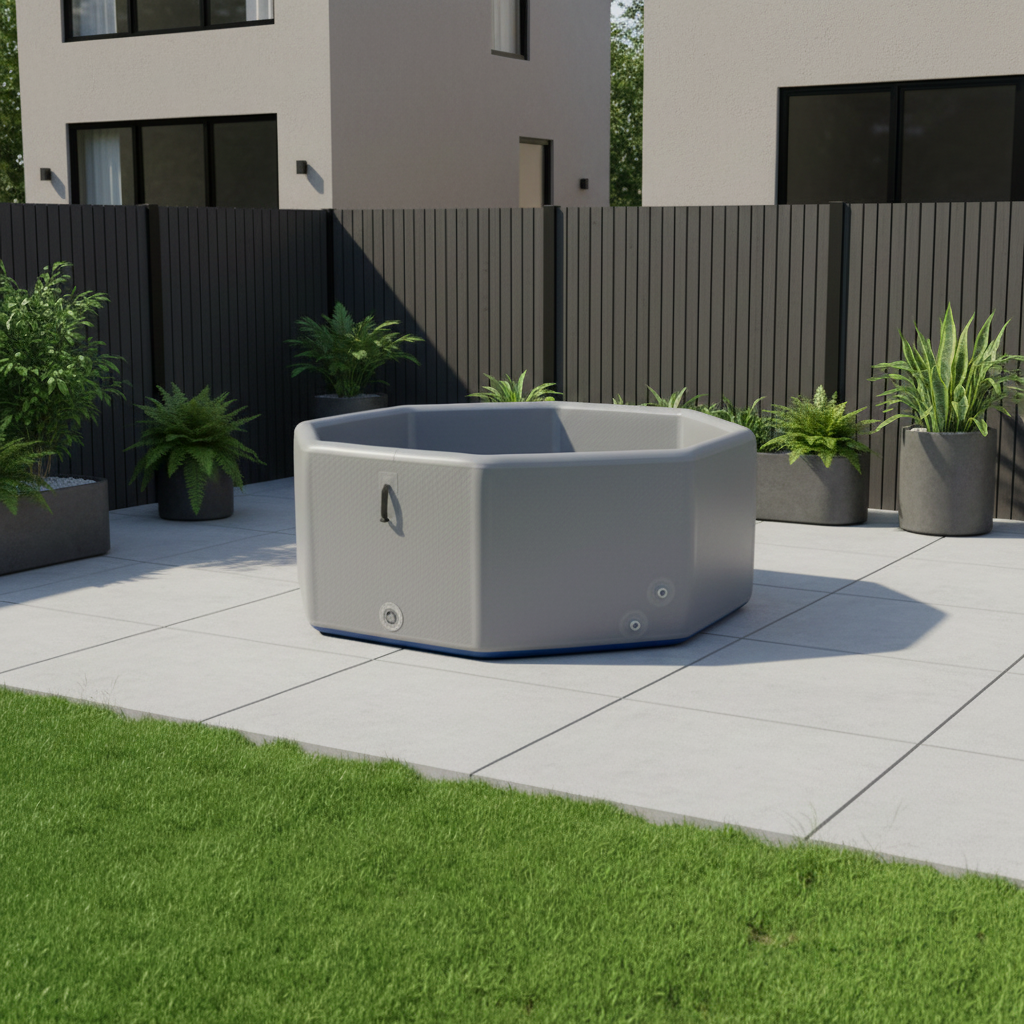
Cold plunge tubs come in several construction styles, each with its own design considerations.
Inflatable models, frame-based designs and rigid hard-shell tubs may look similar in purpose, but they achieve their structure in different ways.
An inflatable tub relies on its inflated construction to maintain its shape. A frame-based model uses a separate supporting structure around its tub body. A hard-shell design uses a rigid body that maintains its shape without inflation.
None of these approaches is automatically the best for every situation.
Instead, consider what each construction offers in relation to:
Structural support and shape retention.
Interior space and user access.
Setup and assembly requirements.
Storage and transportation after draining.
Cleaning and maintenance.
Connections, seams and drainage details.
Small design decisions can have a surprisingly large influence on how a product performs in everyday life.
The lid, drain valve, hose fittings, liner finish and connection points may not be the first things a customer notices, but they are often the details that determine whether a product feels thoughtfully designed.
It's easy to focus on impressive specifications when comparing cold plunge products. But a product that looks excellent on paper may not necessarily be the most convenient option for a particular home.
Before making a decision, ask a few simple questions:
Can the water temperature be adjusted to suit different preferences?
Does the tub offer enough usable interior space?
Is the water filtration and maintenance process clearly explained?
Can the chiller and connections be positioned conveniently?
Is filling, draining and cleaning manageable?
Does the product suit the intended indoor or outdoor environment?
These questions shift the focus from individual specifications to the complete ownership experience.
For product brands and retailers, this is an important distinction too. A cold plunge is not simply a tub paired with a cooling unit. Its value is shaped by how well the tub, chiller, water management components and user-facing details work together.
The initial appeal of a cold plunge may come from the shock of cold water. But what makes a product practical over time is a much broader combination of factors.
Temperature control, interior comfort, water care, installation requirements and construction details all contribute to the experience.
The lowest temperature may catch someone's attention. The complete product design is what deserves a closer look.
Beyond the shock, it's the details that make a cold plunge work for everyday life.
1. Is a colder cold plunge always better?
Not necessarily. Different users have different preferences and levels of cold exposure experience. The most suitable temperature depends on individual circumstances and the manufacturer's guidance. There is no single temperature that is right for everyone.
2. What should I look for in a home cold plunge?
Consider temperature control, usable interior dimensions, construction, water filtration and treatment, maintenance requirements, installation space and the compatibility of the chiller with the tub.
3. Does a cold plunge need a filtration system?
Water-care requirements depend on the product configuration and intended use. Filtration can help remove particles, but it does not replace appropriate disinfection or water treatment. Always follow the manufacturer's maintenance instructions.
4. Can a cold plunge be installed indoors or outdoors?
Some products are designed for indoor use, some for outdoor use, and others may support both under specified conditions. Check the product's environmental suitability, electrical requirements, drainage arrangements and installation instructions before choosing a location.
5. What makes a cold plunge easy to maintain?
Accessible drain connections, manageable filtration components, practical covers, clear water-care instructions and convenient access to the chiller can all make routine maintenance easier.

 EN