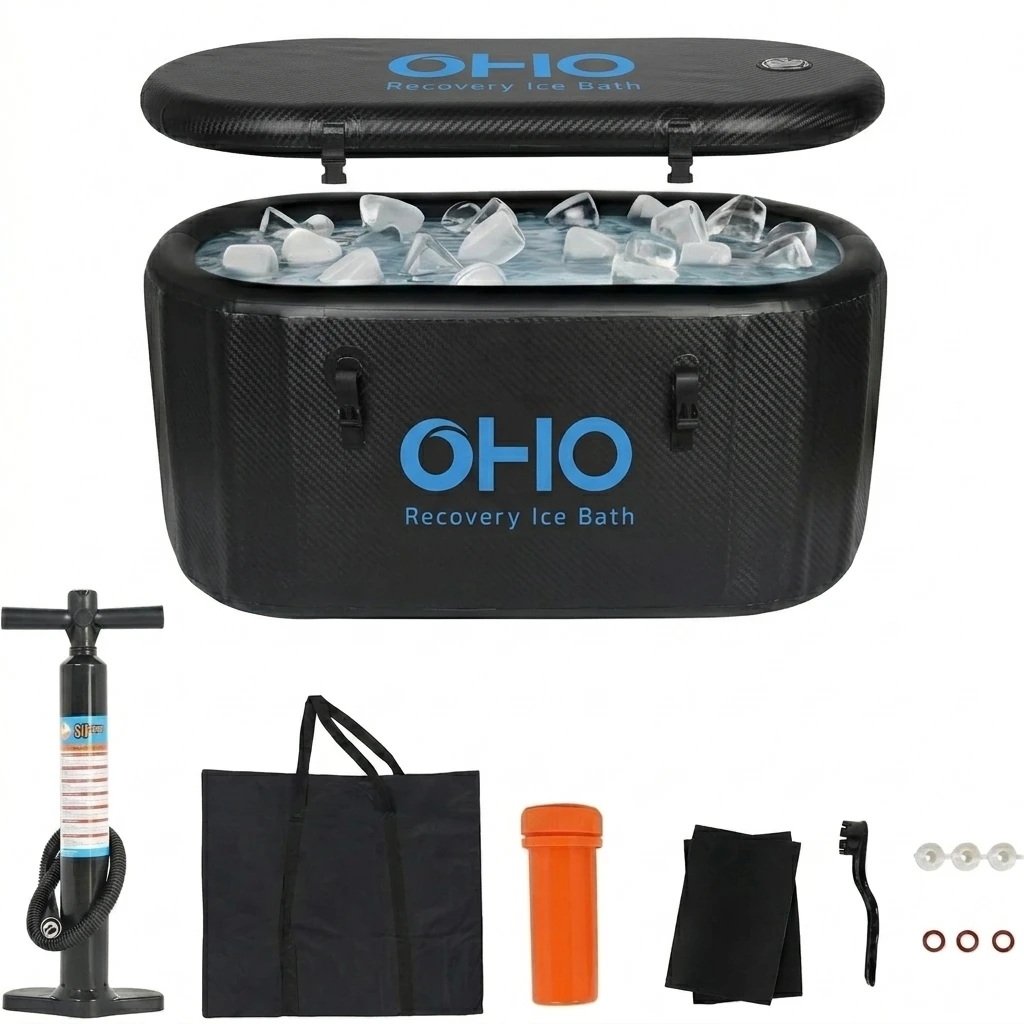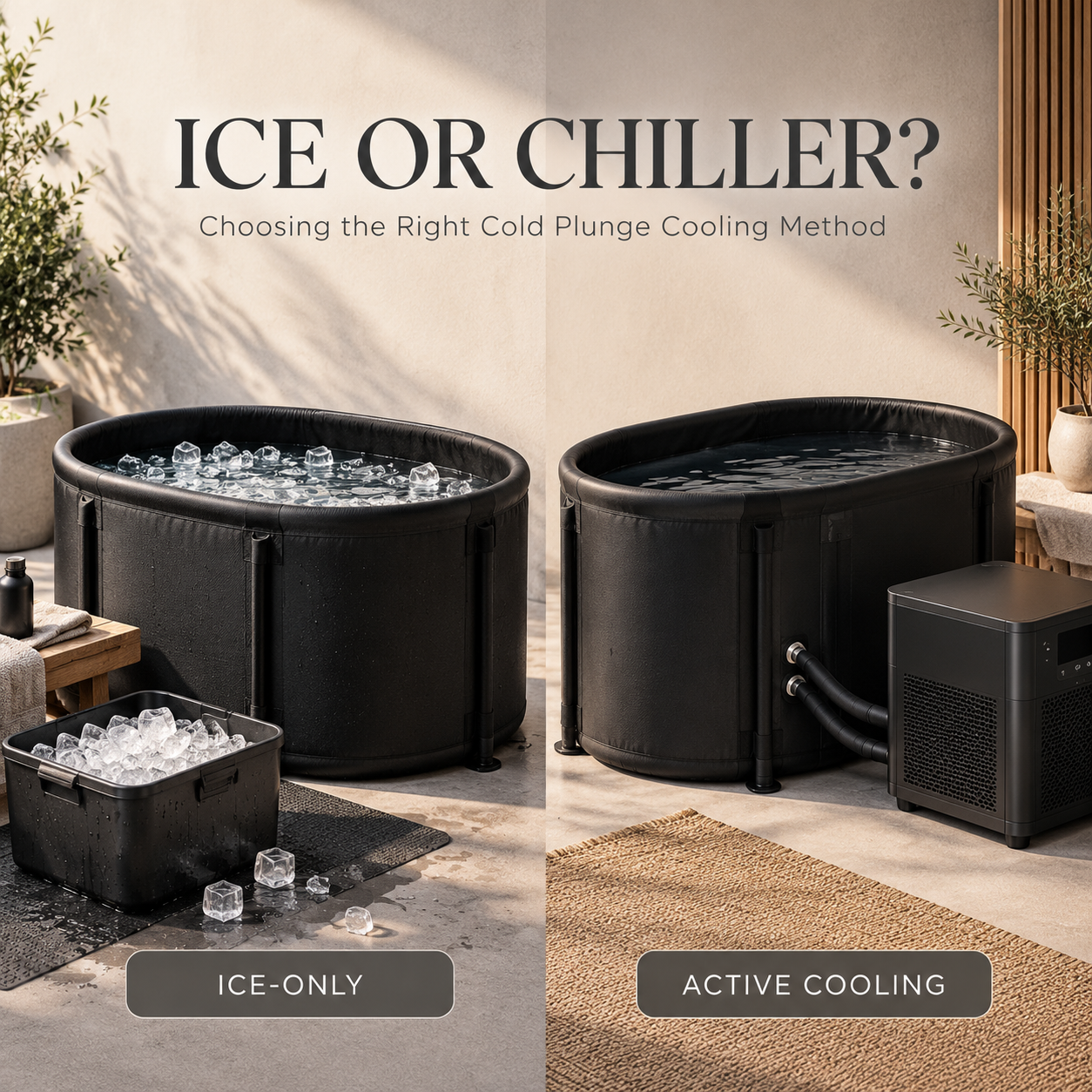
A cold plunge does not automatically need a chiller.
For some people, a tub filled with cold water and ice is all they need. For others, buying ice, estimating how much to add, and preparing the water before every session quickly becomes a chore.
Both approaches can cool a cold plunge. The difference is how they get the water cold, how consistently they maintain the temperature, and how much work is required to keep the setup ready.
So, is a cold plunge chiller worth it? The answer depends less on which method sounds more advanced and more on how you plan to use your tub.
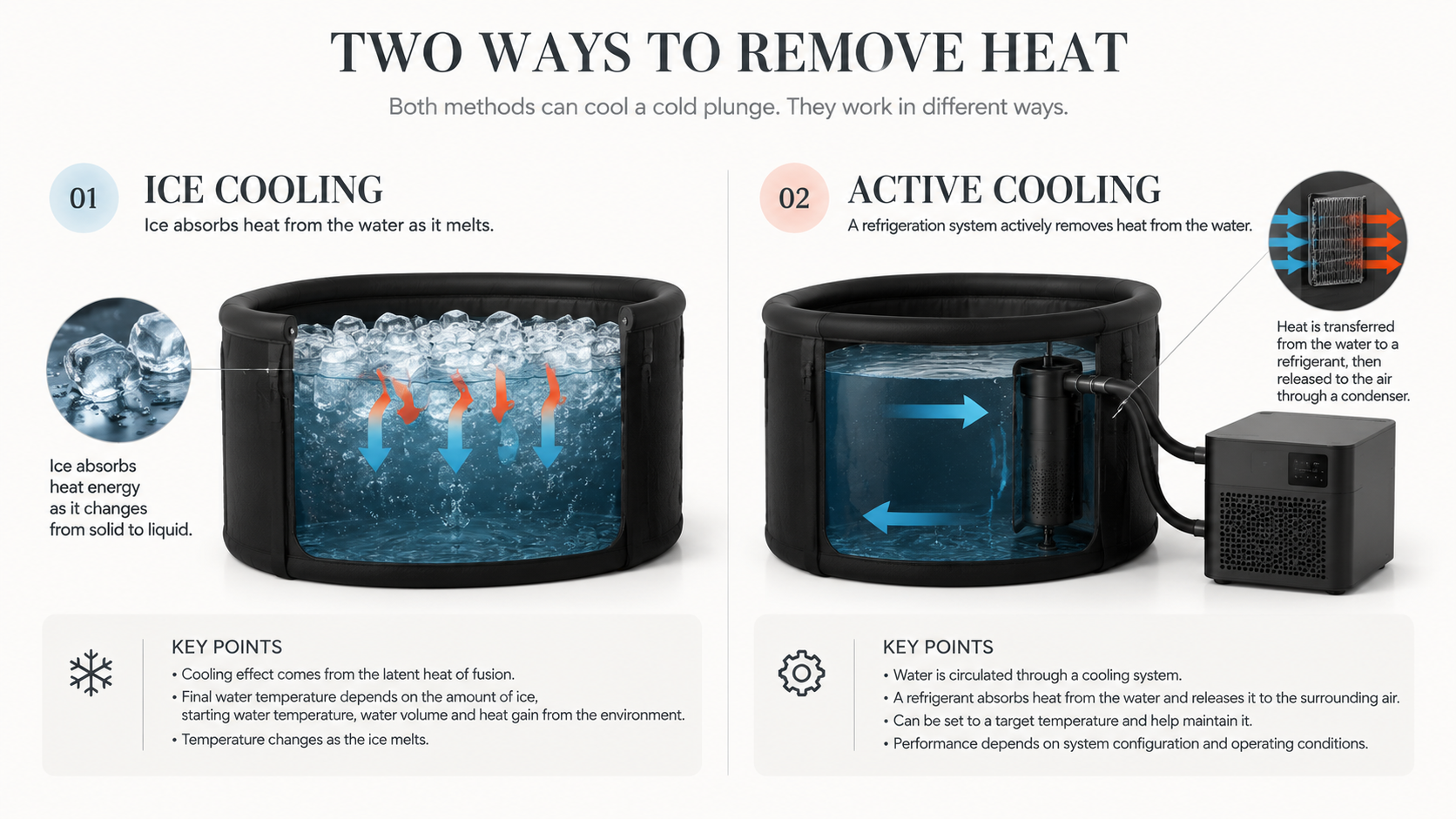
The basic distinction is simple: ice cools water as it melts, while a chiller actively removes heat from the water.
With an ice-only setup, the water temperature depends on factors such as the starting temperature, the amount of ice added, the water volume, and how much heat enters the tub from its surroundings.
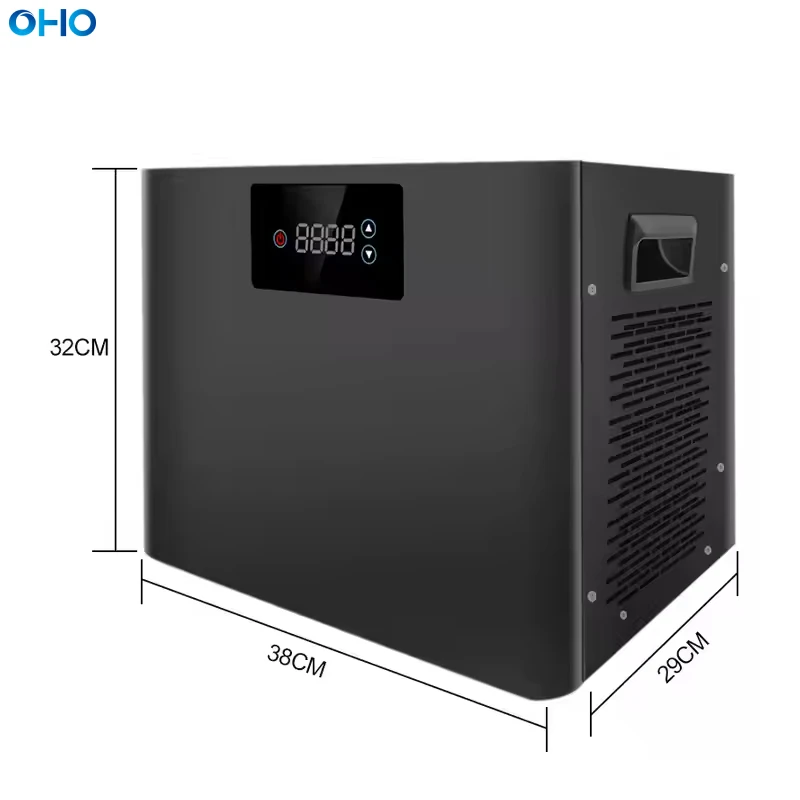
A chiller-based system uses refrigeration to remove heat. When properly sized, installed, and operated within its rated conditions, a temperature-controlled chiller can bring the water toward a chosen setpoint and help maintain it there.
Neither approach is automatically better. Each suits a different type of routine.
| What matters | Ice-only cold plunge | Cold plunge with a chiller |
|---|---|---|
| Initial investment | Usually lower | Higher because of the cooling equipment |
| Temperature control | Depends on ice, starting water temperature and heat gain | More repeatable with a correctly configured system |
| Preparation | Ice must be prepared, purchased or stored | Less hands-on cooling preparation once set up |
| Ongoing costs | Ice, storage and the time spent preparing each session | Electricity, plus applicable filter, pump and maintenance costs |
| Setup | Relatively simple | Requires compatible equipment, connections and suitable power |
| Maintenance | Water care and tub cleaning are still necessary | Water care remains necessary, alongside equipment maintenance |
| Best suited to | Occasional use and users who prefer a simple setup | Frequent use and users who value repeatable temperature control |
The key difference is not simply how cold the water can get. It is how much effort you want to put into achieving and maintaining the temperature you prefer.
Ice is a practical option if you want to keep your initial investment low or are still figuring out whether cold plunging will become part of your routine.
It has several advantages.
Low equipment commitment. You can start with a suitable cold plunge tub without immediately investing in a separate cooling unit.
A straightforward setup. There is no chiller to connect, and an ice-only system does not require refrigeration equipment or its associated electrical supply.
Flexible use. You can adjust the amount of ice according to your starting water temperature and preferred conditions.
But ice also has limitations.
You need a reliable way to obtain or make it, enough storage space, and time to prepare the water. The amount required can vary considerably. A large tub filled with warm tap water on a hot day will behave differently from a smaller, insulated tub filled with already-cool water.
Ice also melts. As the cooling effect diminishes and heat continues to enter the water, the temperature changes.
For occasional sessions, this may be perfectly acceptable. If you want the same water temperature available at predictable times throughout the week, however, the preparation can become less convenient.
A chiller becomes more attractive when convenience and repeatability matter more than keeping the initial equipment cost to a minimum.
You plunge frequently. If cold plunging is already a regular habit, repeatedly buying, making and adding ice may become an unnecessary part of the routine.
You prefer a defined temperature. A temperature-controlled system makes it easier to work toward a chosen water temperature without estimating the amount of ice required for each session.
You want the water ready when you need it. Rather than preparing a fresh ice bath each time, you can use a properly configured system to cool the water and maintain the selected setting within its operating limits.
You want a more integrated setup. Depending on the design, a chiller system may include or connect to a pump, filter and other water-management components.
There are trade-offs, of course.
A chiller costs more upfront, consumes electricity, produces operating noise and requires appropriate installation and maintenance. Some models include circulation pumps and filters, while others require separate components. Compatibility with your tub must be confirmed before purchase.
A chiller is therefore not simply an upgrade that everyone needs. It is a different approach to managing the water temperature.
This is where the answer becomes personal.
Ice-only cooling has a lower equipment cost, but the recurring expense depends on how often you plunge and how much ice each session requires.
A chiller has a higher initial cost, but its running expenses depend on electricity rates, cooling demand, insulation, ambient temperature, operating hours and the system's efficiency under those conditions.
There is no universal point at which a chiller becomes cheaper.
A useful way to compare the two is to calculate your own costs.
For an ice-only setup:
Annual ice cost = cost per session × number of sessions per year
For a chiller-based setup:
Annual running cost = electricity cost + applicable consumables + routine maintenance
You should also account for the initial purchase price and any necessary accessories or installation costs.
If you plunge only occasionally, the additional equipment may be difficult to justify financially. If you use the tub several times a week, the convenience may be worth paying for even if the financial break-even point takes longer to reach.
The goal is not to assume one option is always cheaper. It is to understand what you will actually spend for the way you use the product.
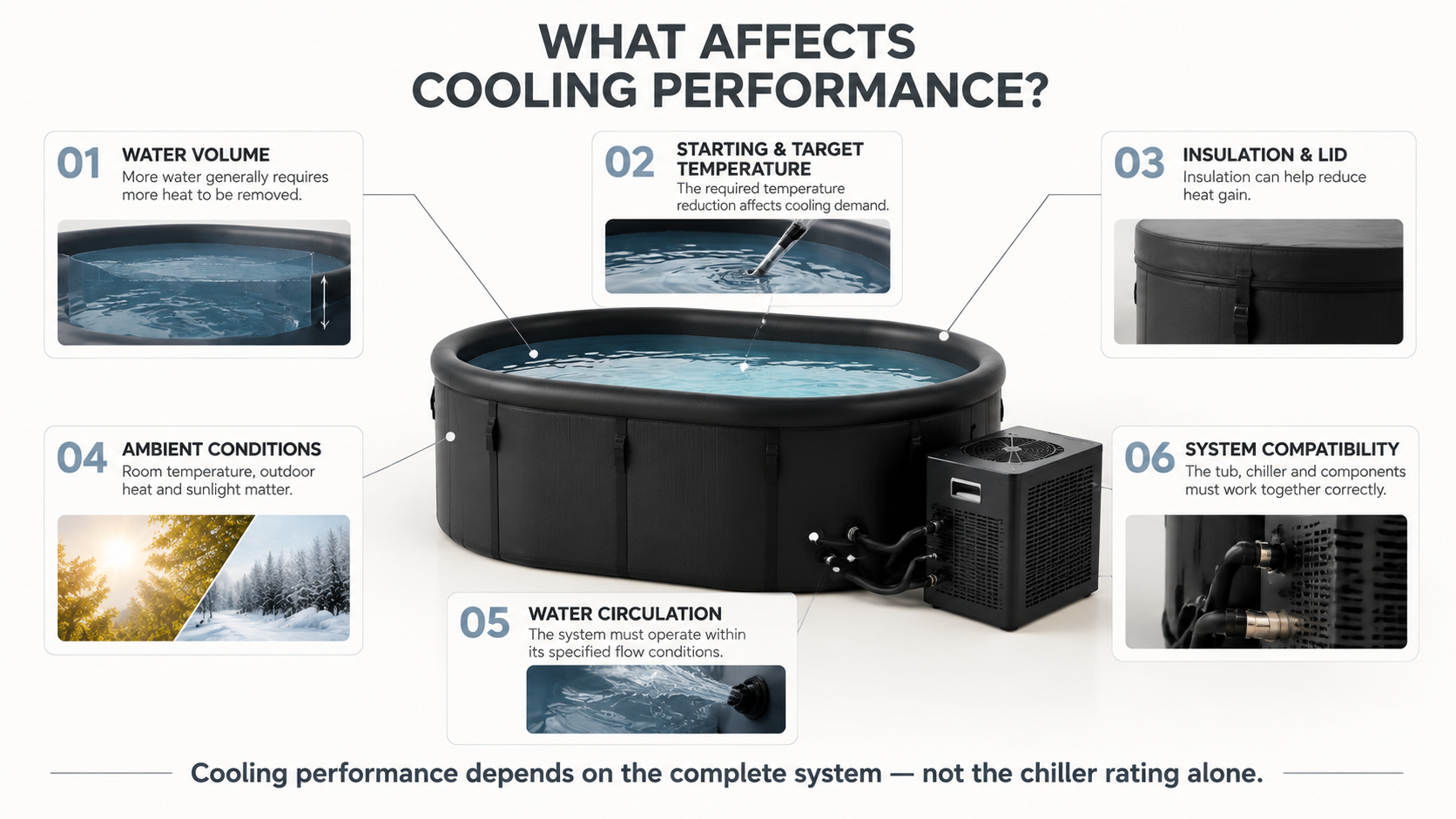
Even a well-designed chiller cannot compensate for every condition in the surrounding system.
Several factors influence how quickly water cools and how well it stays at the selected temperature.
Water volume. More water generally requires more heat to be removed for the same temperature reduction.
Starting and target temperatures. Cooling water from a relatively cool starting point is different from bringing warm water down to a much lower target.
Insulation and the lid. An insulated tub and a well-fitted lid can help reduce heat entering the water from the surroundings.
Ambient temperature and sun exposure. A tub placed outdoors in direct sunlight may gain more heat than one kept in a cooler, shaded location.
Circulation and system compatibility. A chiller needs to operate with the appropriate water flow, connections and other components specified for that model.
This is why cooling performance should be evaluated as a complete system rather than by the chiller's advertised power rating alone.
A higher-rated unit is not automatically the best match for every tub. The actual configuration and operating conditions matter.
Not necessarily.
Cooling and water care are two different jobs.
A chiller controls water temperature. A filter can capture certain particles. Neither function, by itself, guarantees that the water is properly sanitized.
Some systems integrate filtration or additional water-treatment features; others do not. The appropriate water-care routine depends on the equipment, the treatment method, how frequently the tub is used and the manufacturer's instructions.
Regardless of whether you use ice or a chiller, the tub still needs appropriate cleaning and water management.
If you are comparing complete cold plunge systems, check what is included rather than assuming that every chiller provides circulation, filtration and sanitation.
The simplest way to decide is to consider your routine first.
Ice may be enough if you:
Plunge occasionally rather than every day.
Want the lowest initial equipment commitment.
Have convenient access to ice.
Are comfortable preparing the water before each session.
Do not need a tightly controlled, repeatable temperature.
A chiller may be the better fit if you:
Plunge frequently.
Prefer a consistent, adjustable water temperature.
Want to reduce the repeated work of preparing ice.
Have a compatible tub, suitable power and an appropriate place for the equipment.
Are comfortable with the additional electricity use and maintenance.
There is also no need to purchase every component at once. If you are new to cold plunging, starting with ice can help you understand your preferences before deciding whether active cooling is worth the investment.
If you already know that you want a regularly available, temperature-controlled setup, it makes sense to evaluate the tub and chiller together from the beginning.
Yes. A suitable tub can be cooled with ice, provided you can achieve and manage the water conditions you want. Whether this is convenient depends on the water volume, starting temperature, environment and frequency of use.
Not in every situation. The result depends on the amount of ice, the chiller's actual cooling capacity, the water volume, starting temperature, target temperature, insulation and ambient conditions. A properly matched chiller offers a more controlled way to manage water temperature, but its cooling time should be evaluated under defined conditions.
No. Check the chiller's compatibility with the tub, including the required connections, water flow, capacity, pump arrangement and electrical requirements. Some systems use an external water loop, while others use a different cooling arrangement.
Not by itself. Temperature control is not the same as filtration or sanitation. Check which water-management features are included and follow the manufacturer's cleaning and water-treatment guidance.
It may be, if temperature control and convenience are important to you. However, if you plunge infrequently and have easy access to ice, an ice-only setup may be sufficient. Your usage pattern is a better starting point than a general rule about which method is superior.
Ice and active cooling solve the same basic problem in different ways.
Ice offers a relatively simple starting point with a lower initial equipment commitment. A chiller offers a more controlled and convenient approach for people who want cold water available more regularly, provided the system is correctly matched and maintained.
Before choosing, consider how often you will use the tub, how you want to manage water temperature, the space available and the maintenance you are prepared to handle.
For a closer look at portable cold plunge tubs and chiller configurations, explore OHO's portable ice bath solutions. If you are comparing different cooling architectures, our guide to Drop-In vs. External-Loop Cold Plunge Cooling explains how system design affects installation, water management and maintenance.
The right choice is not necessarily the most complicated system. It is the one that delivers the experience you want, under the conditions in which you will actually use it.

 EN