
 EN
EN
Meta Description: Infrared saunas deliver deep, therapeutic heat without extreme air temperatures. Learn the science, clinical benefits, and how to integrate them into your wellness facility for measurable ROI.
The Wellness Center That Doubled Its Revenue – A Case in Point
A boutique wellness studio in Scottsdale, Arizona, installed two far-infrared saunas in a previously underutilised 200-square-foot storage room. Within three months, those two units generated $8,000 in monthly recurring revenue through a tiered membership add-on. More importantly, member retention among sauna users climbed by 22% compared to non-users. The owner's initial hesitation—"Will clients actually pay for heat?"—quickly dissolved as sessions booked solid seven days a week.
This outcome is not an anomaly. Over the past four years, our commercial wellness team has consulted on over 60 infrared sauna installations—from luxury hotel spas to physical therapy clinics and corporate wellness centres. The consistent pattern is clear: when operators understand the underlying science and price strategically, infrared saunas transition from a passive amenity to an active profit centre. Understanding how infrared saunas work isn't just about physics; it is about unlocking a clinically grounded tool that drives retention, differentiates your offering, and generates predictable recurring revenue.
The Radiant Difference – How Infrared Saunas Generate Heat
Infrared saunas use radiant light to heat the body directly—unlike traditional saunas, which rely on convection to warm the surrounding air. This technology emits electromagnetic waves in the invisible infrared spectrum; when absorbed by skin and underlying tissues, they generate gentle, deep-penetrating heat from within. As a result, users experience therapeutic sweating at lower ambient temperatures—typically 120°F to 140°F—compared to the 180°F–200°F of conventional steam or dry saunas.
The infrared spectrum is categorised into near-, mid-, and far-infrared wavelengths, each interacting differently with human tissue. Far-infrared (FIR), with its longer wavelengths (5.6–1000 µm), penetrates deepest—reaching muscles, joints, and even cellular structures—to stimulate circulation and metabolic activity. This vasodilation enhances oxygen and nutrient delivery while supporting the removal of metabolic waste. A 2023 study in the Journal of Environmental and Public Health found that regular FIR sauna use increased excretion of heavy metals like lead and cadmium in sweat by up to 30%, underscoring its role in supporting natural detoxification pathways. The cumulative effect is a comfortable, physiologically efficient session that promotes recovery and resilience without thermal stress.
Three Core Health Benefits – What the Clinical Evidence Supports
Detoxification and Circulatory Support
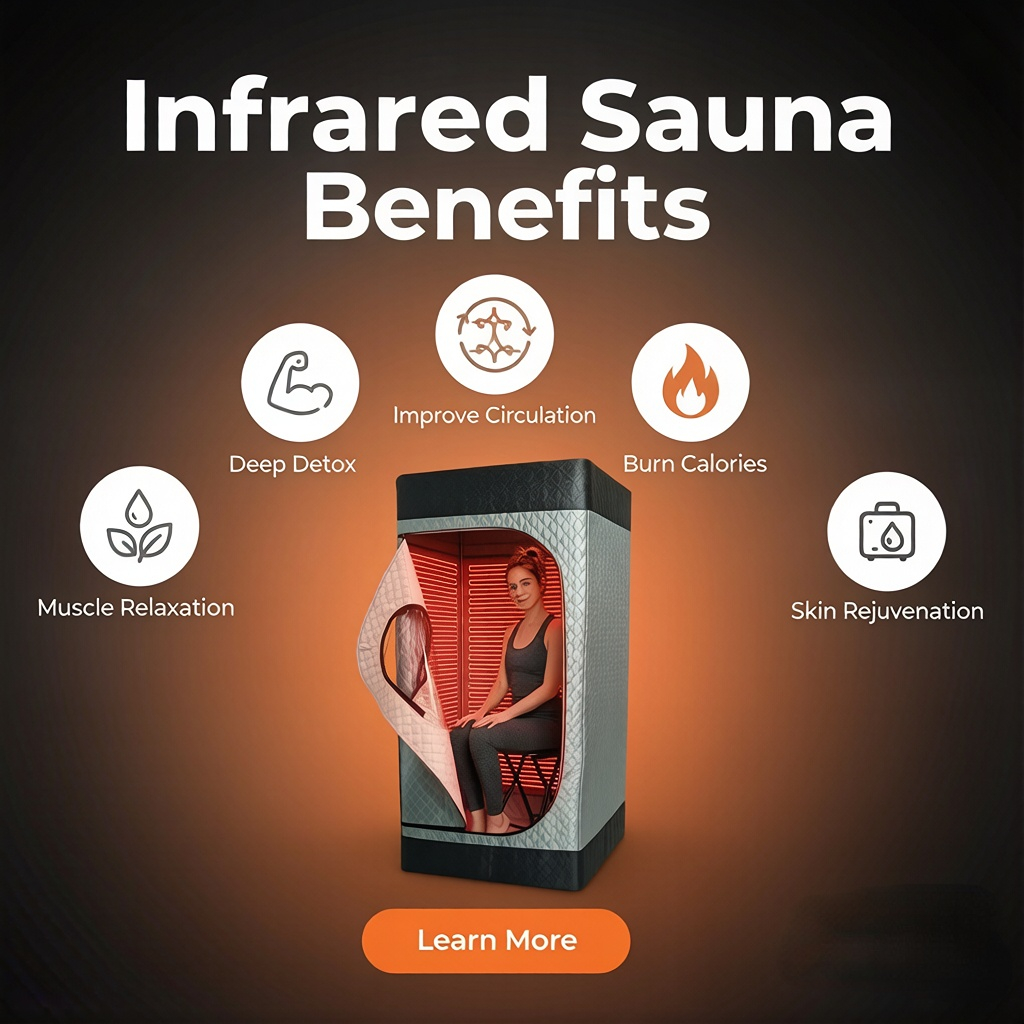
Infrared saunas induce a deep, low-temperature sweat that mobilises toxins stored in adipose tissue—including heavy metals, BPA, and phthalates—lightening the burden on the liver and kidneys. Simultaneously, the thermal stimulus elevates heart rate and triggers systemic vasodilation, improving microcirculation and endothelial function. Clinical evidence, including Genuis et al.'s landmark 2011 research, confirms sweat-based elimination of environmental toxins—and consistent use has been associated with measurable reductions in systolic and diastolic blood pressure. These interlinked mechanisms make infrared heat a clinically grounded tool for foundational detox support and cardiovascular wellness.
Muscle Recovery and Pain Management
Deep infrared heat increases localised blood flow, reducing inflammation and accelerating soft-tissue repair. For individuals managing chronic musculoskeletal conditions—such as osteoarthritis, fibromyalgia, or post-exercise soreness—regular sessions help relax hypertonic muscle fibres, decrease joint stiffness, and modulate pain signalling. Peer-reviewed trials indicate meaningful improvements in pain scores and functional mobility following structured infrared therapy protocols, positioning it as an evidence-informed adjunct to physical rehabilitation and athletic recovery programmes.
Stress Reduction and Sleep Quality
The quiet, enveloping warmth of an infrared sauna activates the parasympathetic nervous system—lowering cortisol, slowing respiratory rate, and promoting mental calm. This physiological shift supports restorative sleep architecture: studies show users report faster sleep onset, fewer nocturnal awakenings, and improved subjective sleep quality after consistent use. Over time, this contributes to sustained mood regulation and reduced symptoms of anxiety and mild depression—making infrared heat not just a physical intervention, but a holistic nervous system modulator.
Commercial Sauna Types – Matching Technology to Your Business Model
Far-Infrared vs. Near-Infrared vs. Full-Spectrum Systems
Infrared sauna equipment varies by wavelength penetration, directly influencing the therapeutic outcome. The following table summarises the key commercial distinctions.
| Type | Wavelength | Primary Benefit | Ideal Commercial Use |
|---|---|---|---|
| Near-Infrared (NIR) | Short (0.7–1.4 µm) | Skin health, collagen boost | Spas, dermatology clinics |
| Far-Infrared (FIR) | Long (5.6–1000 µm) | Deep detoxification, pain relief | Gyms, recovery centres, wellness studios |
| Full-Spectrum | All ranges | Combined benefits, customisable sessions | Premium wellness facilities, hotels |
Far-infrared systems dominate the commercial market for their deep heating and detoxification efficacy, while full-spectrum designs are increasingly preferred by premium facilities seeking a versatile, all-in-one wellness tool.
Modular, Portable, and Built-In Solutions for Different Footprints
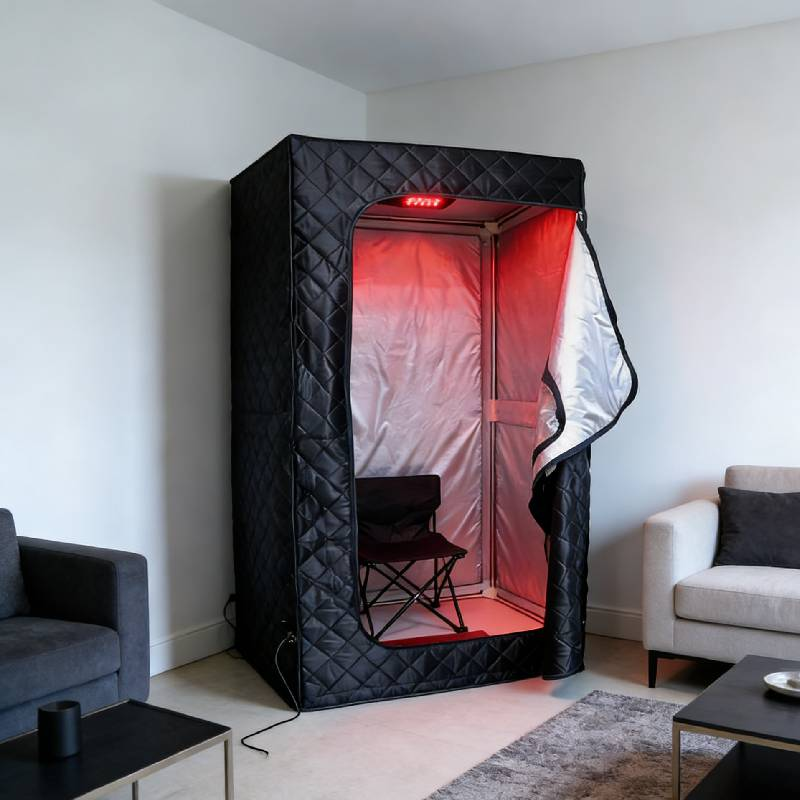
Infrared sauna units come in several configurations to suit different business footprints. Modular, pre-built cabins offer quick setup and can be relocated as needed, making them ideal for fitness centres and pop-up recovery events. Portable, often blanket-style or foldable, saunas serve mobile therapists and low-footprint wellness corners. For permanent installations, built-in custom saunas allow seamless integration with luxury spas, hotels, and medical clinics, matching the facility's design and brand. Selecting the right form factor ensures efficient space use and a smooth member experience.
| Configuration | Best For | Setup Time | Space Requirement | Flexibility |
|---|---|---|---|---|
| Modular Pre-Built | Gyms, temporary events | 1–2 hours | 15–25 sq. ft. | High; relocatable |
| Portable / Foldable | Mobile therapy, small studios | 5–10 minutes | Minimal; foldable | Very high |
| Built-In Custom | Luxury spas, hotels, clinics | 2–4 weeks | Custom footprint | Low; permanent |
Commercial Integration – Space, Power, and Compliance
Before installation, assess the designated area for dimensions, ventilation, and structural support. Most commercial infrared saunas require a dedicated 220V circuit, and proper grounding is essential for safety. Ensure compliance with local building codes and health regulations—including the International Fire Code (IFC) for thermal appliances. A typical two-person unit needs at least 15 square feet of floor space and 8 inches of clearance around the unit for airflow and heat dissipation. Ambient temperature control and moisture-resistant finishes are also advisable to protect interior materials and maintain long-term performance. Engaging a licensed electrician early in the process prevents costly retrofits and accelerates permitting. UL and ETL certifications are non-negotiable indicators of electrical safety—always verify that the equipment meets these standards before purchase.
ROI and Client Retention – The Business Case for Infrared Saunas
The return on investment hinges on strategic pricing and integration—not just equipment cost. Facilities offering infrared sauna access as a premium add-on often see a 20–30% lift in per-visit revenue. To strengthen retention, embed sauna access into tiered membership models or bundled wellness packages—for example, unlimited sessions for platinum-level gym members correlated with a 15% increase in annual renewal rates in one documented case study.
Tracking usage frequency, session duration, and client feedback enables data-driven refinements to scheduling, staffing, and marketing. With disciplined execution, most B2B operators recoup their initial investment within 12–18 months—while simultaneously deepening client loyalty and differentiating their service offering. One operator we worked with in Chicago integrated sauna sessions into a post-workout recovery package and saw an 18% increase in overall membership renewals within six months.
Engineering Partnership – What G-Honor Games Brings to the Table
Achieving consistent, safe, and commercially viable infrared sauna performance requires more than purchasing a unit from a catalogue—it demands a partnership with a manufacturer that understands clinical-grade heating technology, electrical safety standards, and facility integration. G-Honor Games brings this engineering-first philosophy to commercial infrared sauna manufacturing. Our units feature UL-certified electrical systems, precision-calibrated far-infrared emitters, and modular cabin designs that adapt to your specific spatial constraints. We offer custom configurations—from two-person recovery cabins to six-person full-spectrum units for luxury hotel spas. Our integrated supply chain ensures consistent component sourcing and documented quality assurance for every batch. Our engineering team collaborates directly with facility operators during the planning phase to ensure power requirements, ventilation clearances, and floor load specifications are accurately matched. For wellness centre owners and facility managers, this translates to safe, reliable equipment, faster installation timelines, and a predictable return on investment.
FAQ
Q: What is the difference between far-infrared, near-infrared, and full-spectrum saunas?
A: Far-infrared penetrates deeply for detoxification and pain relief; near-infrared focuses on skin health and collagen production; full-spectrum combines all wavelengths for a comprehensive range of benefits.
Q: Are infrared saunas safe for regular use?
A: Yes. When used according to manufacturer guidelines, infrared saunas are safe for regular use and offer clinically supported benefits such as detoxification, pain relief, and stress reduction.
Q: What power and space are required for commercial installation?
A: Most commercial units require a dedicated 220V circuit, proper grounding, at least 15 square feet of floor space, and 8 inches of clearance for ventilation.
Q: Can infrared saunas help improve sleep quality?
A: Yes. The parasympathetic nervous system activation from infrared warmth lowers cortisol and supports restorative sleep architecture—users report faster sleep onset and fewer awakenings.
Q: What is the typical payback period for a commercial infrared sauna?
A: Most operators recoup their investment within 12–18 months through strategic pricing, tiered memberships, and premium add-on packages.
Q: What safety certifications should I look for in a commercial infrared sauna?
A: Look for UL (Underwriters Laboratories) and ETL (Intertek) certifications, which indicate compliance with established electrical safety standards.