At first glance, most cold plunge tubs do the same job: hold water at a temperature suitable for cold immersion. But look beyond the shape, and the differences become more interesting.
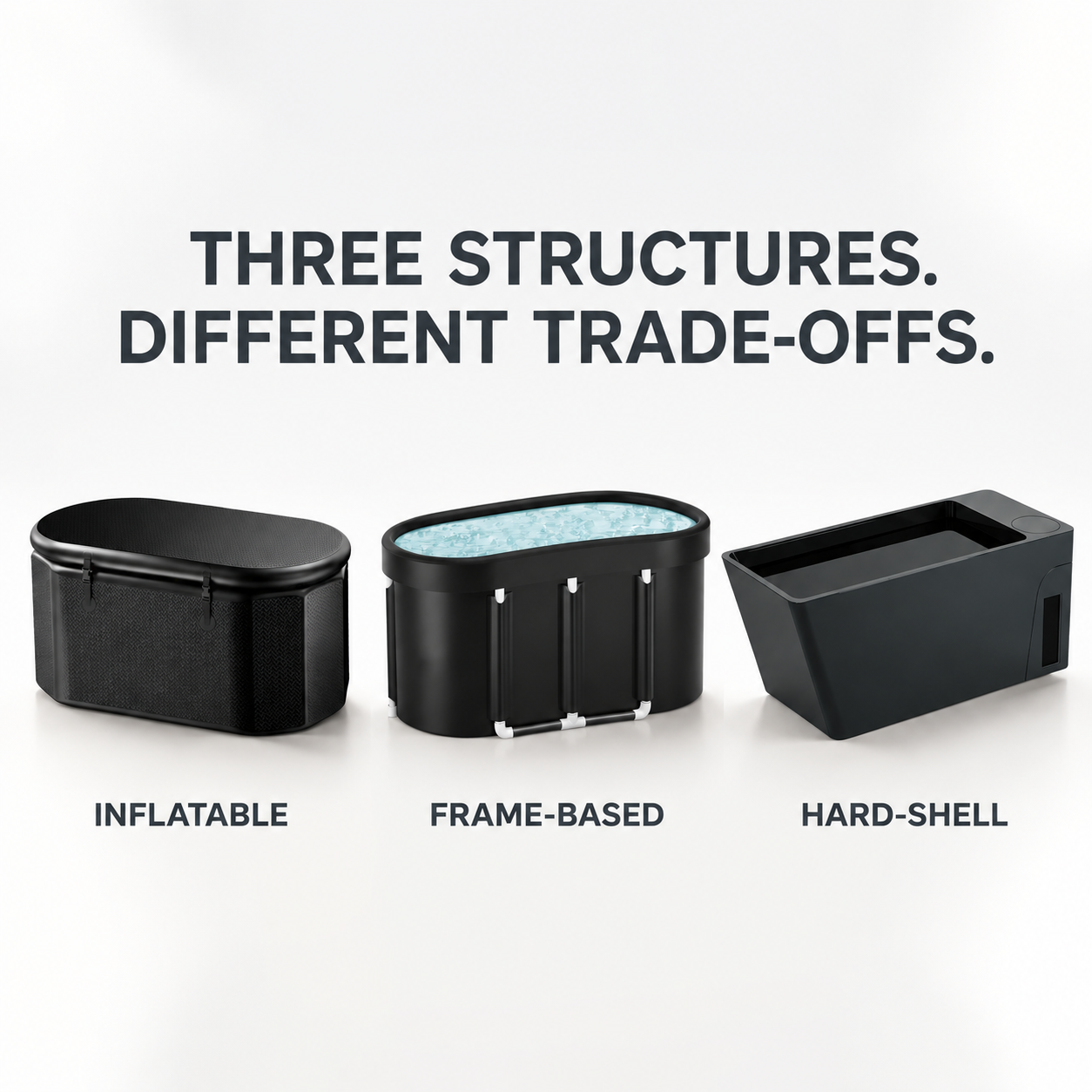
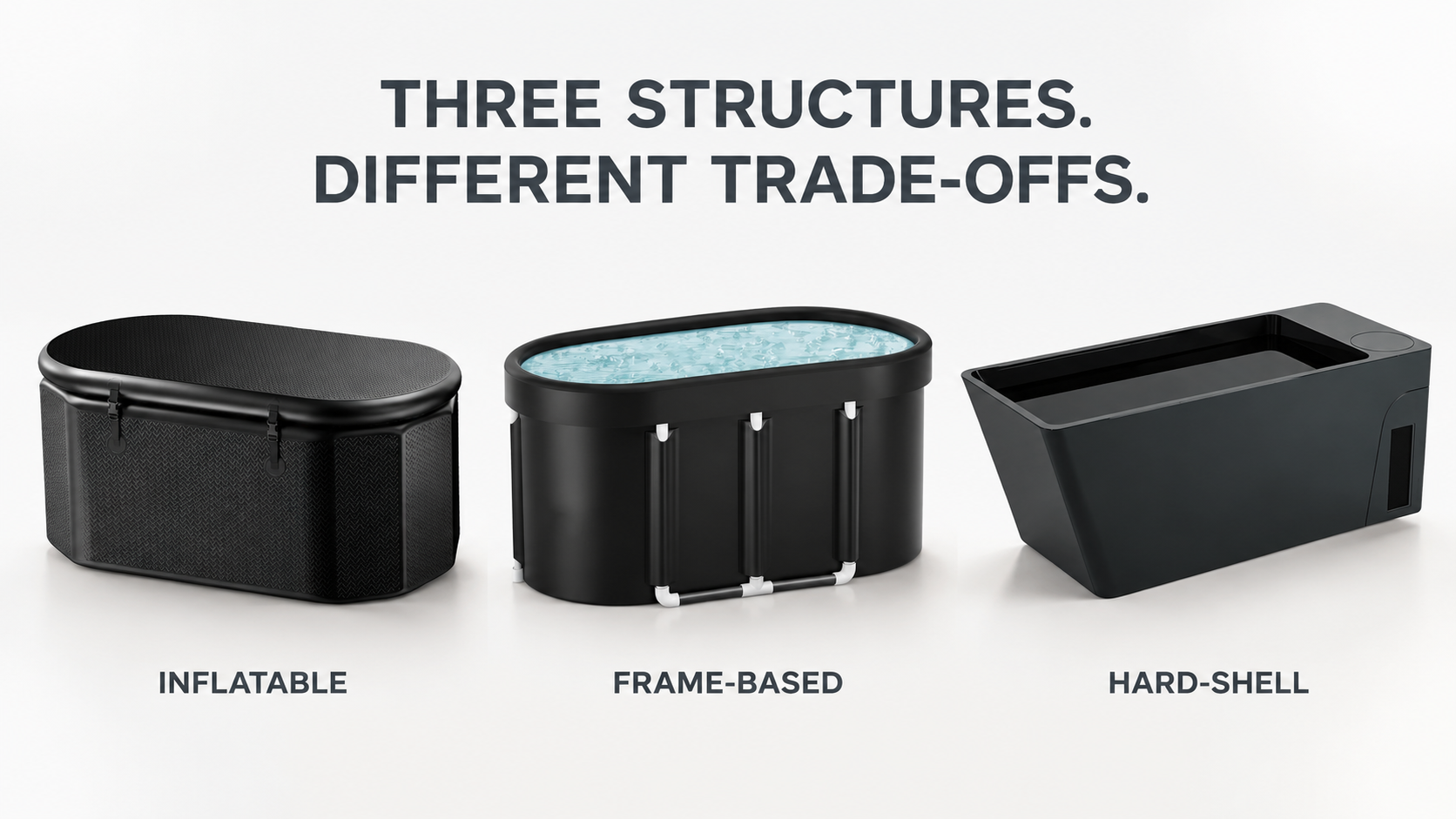
Some tubs use flexible walls that can be deflated and packed away. Others rely on a separate frame to support the tub's shape. Hard-shell models use a rigid body designed to stay in place.
These choices affect more than appearance. They can influence setup, storage, structural support, cleaning, transport, and how the tub works with a chiller.
So which type makes the most sense? There is no universal winner. The better choice depends on where the tub will be used, how often it will be moved, and what the user expects from the complete setup.
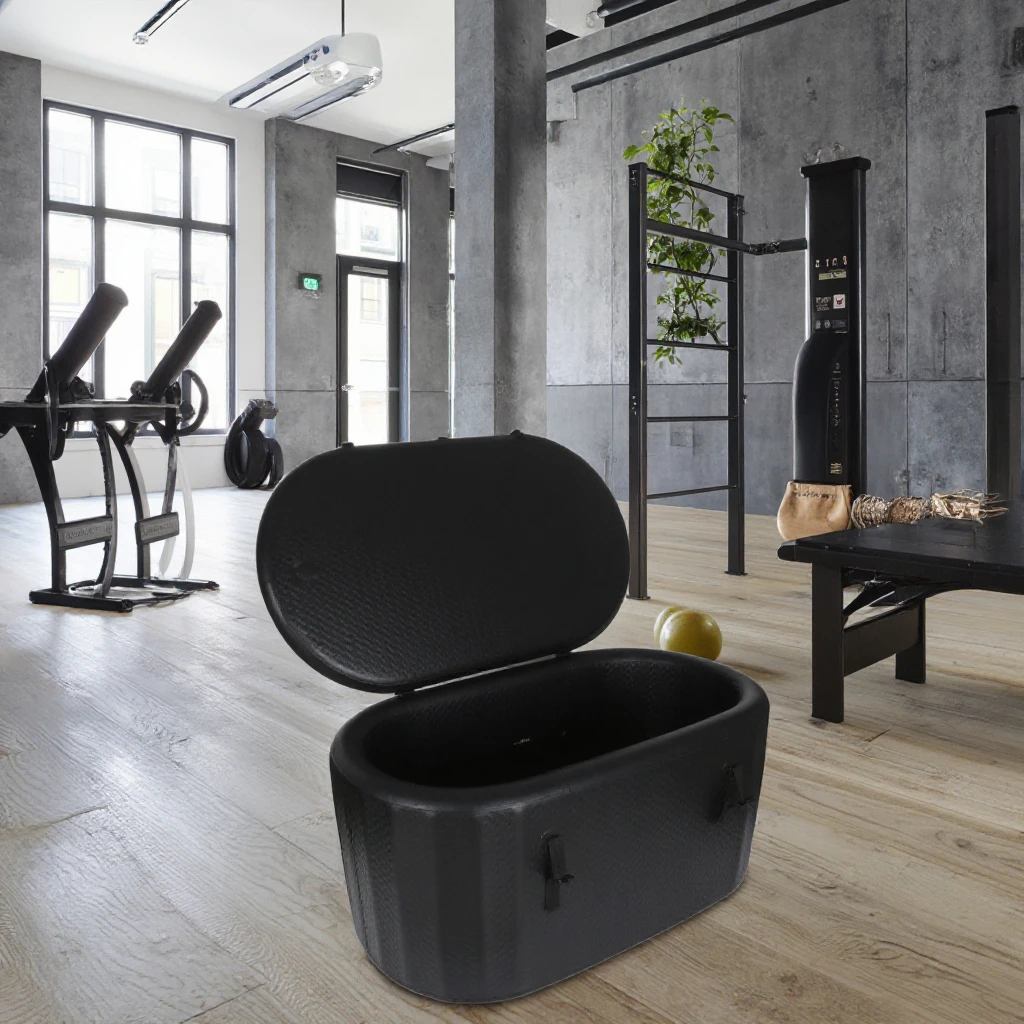
An inflatable cold plunge uses air-supported walls to create its shape. Some models use conventional inflatable chambers, while others use drop-stitch construction, in which thousands of internal threads connect the outer surfaces to help the inflated walls hold a more defined shape.
The main appeal is flexibility. Many inflatable tubs can be deflated for storage or transport, making them useful when permanent floor space is limited.
However, not all inflatable tubs are built alike. Wall construction, material thickness, seams, valves, insulation and the quality of the base can vary considerably.
A well-designed inflatable should therefore be evaluated by its actual construction, rather than judged by the word "inflatable" alone.
A frame-based cold plunge uses a separate supporting structure to hold a liner or flexible tub body in position. Depending on the design, the frame may use metal poles, reinforced plastic components or other structural elements.
The frame helps define the tub's shape and supports its walls. Some designs can be disassembled for storage, while others are intended to remain assembled during use.
The trade-off is that portability depends on more than the liner itself. Users may need to assemble the frame, align its connections and store additional components when the tub is not in use.
Frame quality also matters. Joint design, corrosion resistance, load distribution and the fit between the frame and liner can all affect the experience.
A hard-shell cold plunge has a rigid body that maintains its shape without inflation or a separate supporting frame. Depending on the product, the shell may be made from molded plastic, acrylic, fiberglass, metal or another rigid material.
Its main advantage is a fixed structure. The tub is generally ready to use once correctly positioned and connected to any required equipment.
But a rigid shell is not automatically better insulated, more durable or easier to maintain. Those qualities depend on the material, wall construction, finish, fittings and overall design.
Hard-shell tubs also tend to be more difficult to move through narrow doorways or store away when space is needed for something else.
| What to compare | Inflatable | Frame-based | Hard-shell |
|---|---|---|---|
| Basic structure | Air-supported walls | Frame supporting a liner or tub body | Self-supporting rigid body |
| Setup | Inflation and positioning | Frame assembly may be required | Positioning and equipment connection |
| Storage | Many models can be deflated | Frame and liner may need separate storage | Usually requires a permanent or semi-permanent space |
| Portability | Often convenient when empty and deflated | Depends on frame size and disassembly | Depends on weight, dimensions and access |
| Shape retention | Depends on chamber or drop-stitch construction | Depends on frame rigidity and connection design | Depends on shell construction |
| Potential wear points | Seams, valves, material and base | Frame joints, liner, connections and fasteners | Shell, fittings, seals and surface finish |
| Insulation | Depends on wall layers, insulation and cover | Depends on liner, insulation and cover | Depends on shell construction and insulation |
| Cleaning and drainage | Depends on interior surface and drain design | Depends on liner, joints and drain access | Depends on interior geometry and fittings |
| Chiller compatibility | Depends on ports, fittings and system design | Depends on connections and available space | Depends on connections and system design |
These are typical design tendencies, not guaranteed performance differences. A reinforced inflatable may be more stable than a poorly designed frame-based tub, while a rigid shell with limited insulation may retain heat less effectively than a well-insulated flexible design.
The construction details matter more than the category label.
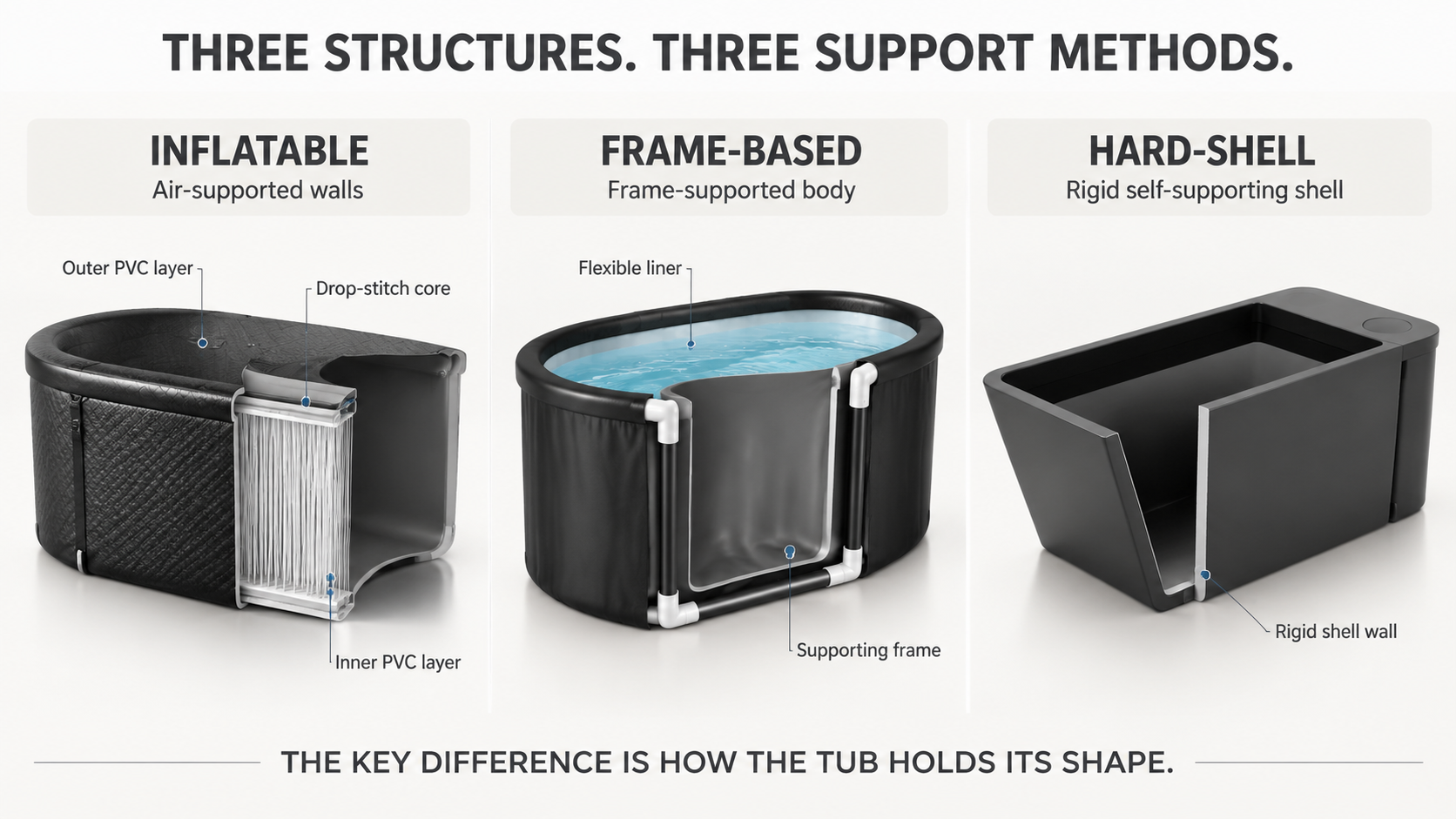
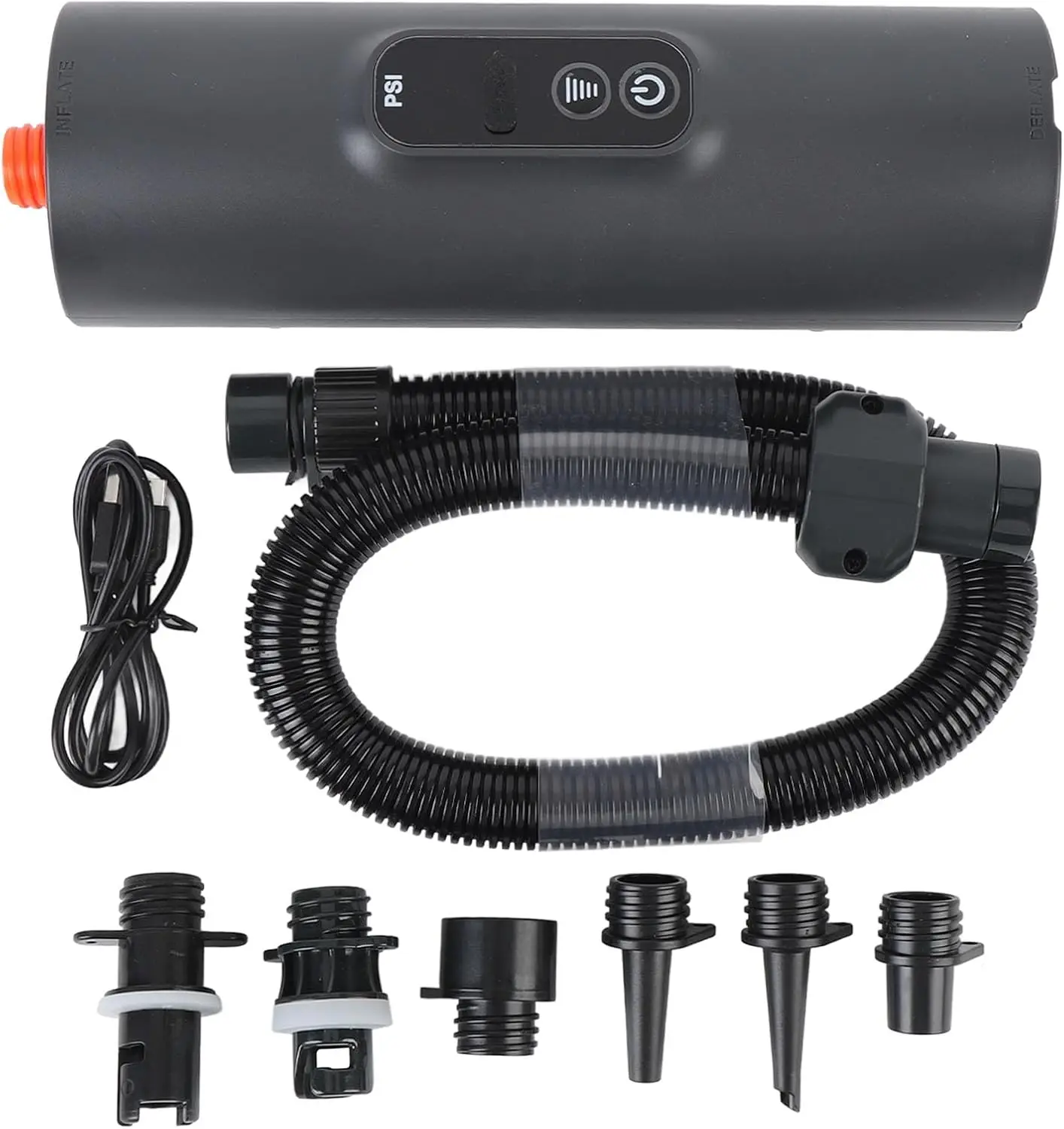
An inflatable tub may require inflation, positioning, filling and connection to a compatible cooling system. A frame-based model may add assembly and alignment steps. A hard-shell tub may require less assembly, but moving it into the intended location can be the most demanding part of the process.
For brands and product developers, the entire setup sequence deserves attention. The number of steps, clarity of instructions, accessibility of connections and availability of replacement parts can all affect the user's first experience.
A tub can be portable in more than one sense.
An inflatable may be relatively easy to pack away after draining and drying. A frame-based design may be disassembled into separate components. A hard-shell tub may be movable while empty but difficult to relocate once installed.
This distinction matters when a product is intended for a small home, a rental property, a garage, a garden or a temporary recovery space.
It is also worth remembering that a tub filled with water should not be treated as a portable object. The filled weight can be substantial, so the installation surface and the manufacturer's placement instructions must be considered before use.
The tub must retain its intended shape under the load of the water and during normal entry and exit.
For an inflatable design, examine wall construction, seams, base support and inflation requirements. For a frame-based design, look at the rigidity of the frame, joint security, liner support and resistance to corrosion where applicable. For a hard-shell model, inspect the shell, base, fittings and any areas that carry concentrated loads.
No construction type eliminates the need for appropriate design and testing.
The shape of the interior, the position of the drain and access to corners can make routine cleaning easier or harder.
A simple-looking tub may still have areas where water collects. A removable liner may simplify some maintenance tasks, but only if the liner can be removed and reinstalled correctly. A rigid shell may offer a smooth interior, but fittings and drain assemblies still need attention.
The key question is not simply which material looks easiest to clean. It is how the complete design supports draining, wiping, inspection and regular water care.
This is where product comparisons can become misleading.
An inflatable tub is not necessarily poorly insulated, and a hard-shell tub is not automatically better at holding cold water. Insulation depends on the complete wall construction, the base, the cover, the exposed water surface and the surrounding conditions.
The same applies to chiller compatibility.
Before pairing a tub with a chiller, check:
The tub's water capacity and the chiller's intended operating range.
Whether the tub has compatible inlet and return ports, or requires another connection arrangement.
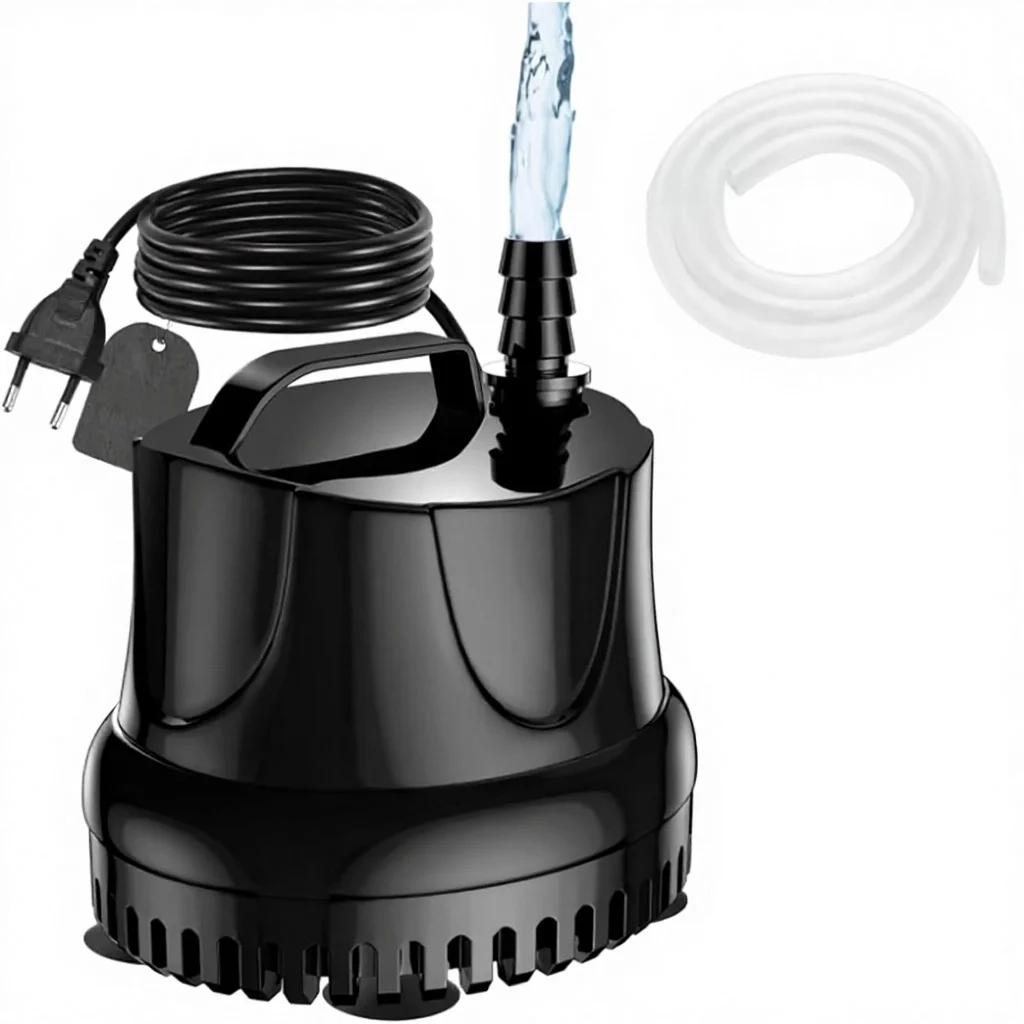
The required water flow and pump configuration, where applicable.
The placement of hoses, cables and the chiller itself.
The manufacturer's instructions for ventilation, drainage and maintenance.
A chiller's advertised power rating alone cannot establish how quickly a particular tub will cool or how well it will maintain temperature. Water volume, starting temperature, insulation, ambient conditions and system configuration all matter.
If you want to explore the cooling side in more detail, read OHO's guide to Drop-In vs. External-Loop Cold Plunge Cooling. It examines how different cooling architectures affect installation, circulation and maintenance.
There is no need to choose a hard-shell simply because it looks more substantial, or an inflatable simply because it can be packed away.
An inflatable may be worth considering when:
Storage space is limited.
The tub may need to be moved or stored between uses.
A flexible setup is a priority.
The construction, insulation and cooling configuration meet the intended requirements.
A frame-based design may be worth considering when:
A defined, supported tub shape is important.
The product needs to be disassembled for transport or storage.
The frame and liner can be assembled and maintained without unnecessary complexity.
A hard-shell may be worth considering when:
The tub has a dedicated installation space.
A rigid, fixed shape is preferred.
The overall weight, access route and maintenance requirements are manageable.
The specific shell and insulation construction meet the intended performance needs.
These are starting points, not strict rules. A well-designed product can combine features from more than one category.
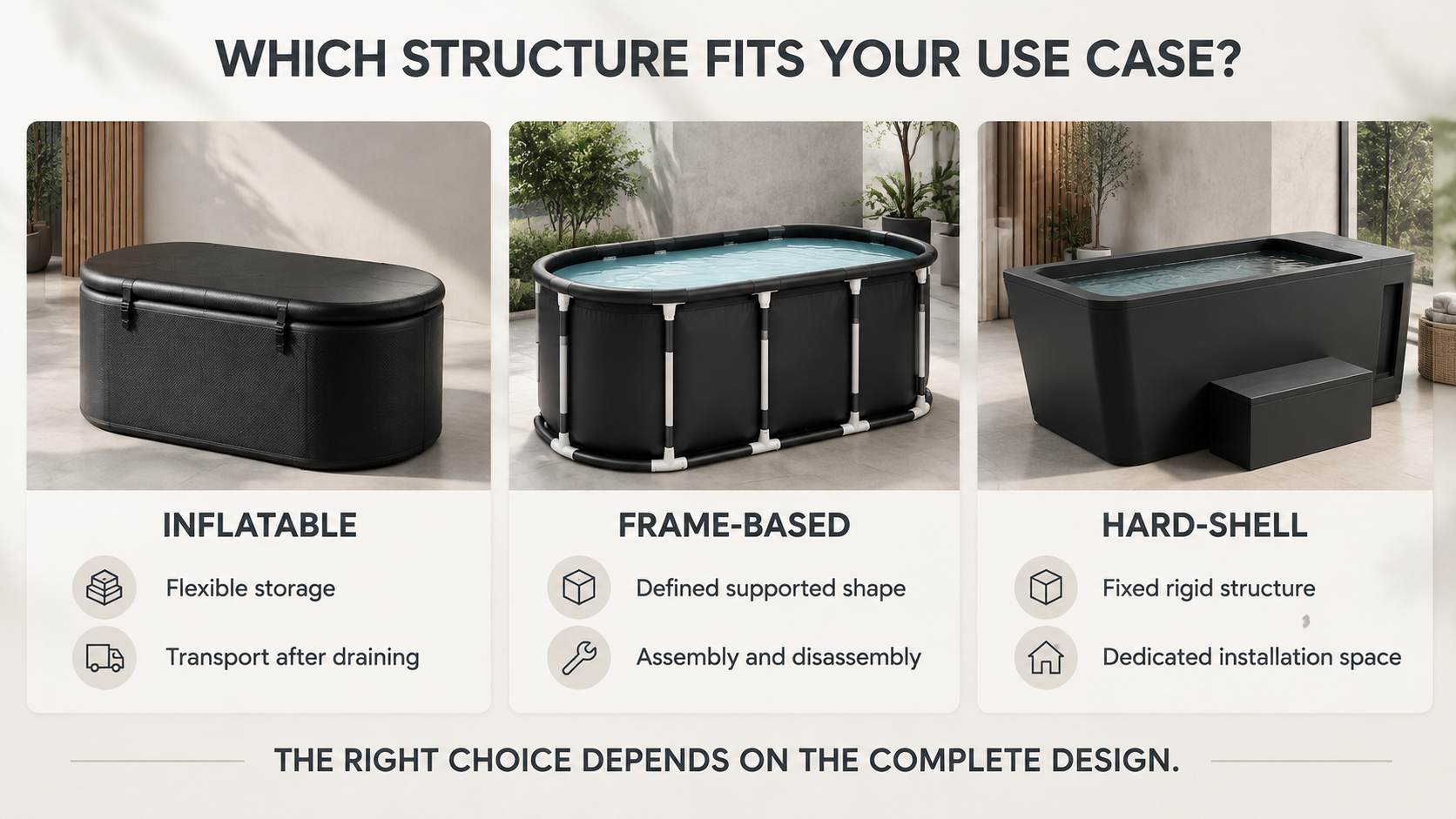
For a DTC brand, retailer or distributor, choosing a cold plunge structure is also a product-positioning decision.
The product needs to work not only in a demonstration photo, but throughout its journey from packaging to everyday use.
Consider five questions:
1. What is the intended user expecting? A customer with limited storage space may value a different design from someone creating a permanent home wellness area.
2. How will the product be shipped and stored? Packed dimensions, protective packaging, component count and assembly requirements affect logistics and handling.
3. What can go wrong during setup? Connection errors, unclear instructions and difficult-to-access components can create unnecessary support requests.
4. Which parts can be replaced? Repairable liners, valves, fittings, frame components and drainage parts can influence maintenance and after-sales support.
5. Does the complete system match the product promise? A tub advertised as portable should be manageable in the way customers expect. A chiller-ready tub should have clearly defined connection and compatibility requirements.
For brands developing a product line, these details are worth reviewing before the structure, packaging and accessories are finalized.
Before making a decision, confirm the following:
Actual internal dimensions and usable water capacity.
Empty weight, packed dimensions and filled weight.
Installation and assembly requirements.
Wall, base and structural construction.
Insulation and cover configuration.
Drain position and cleaning access.
Chiller compatibility and connection requirements.
Availability of replacement parts and repair instructions.
Warranty coverage and intended operating conditions.
These details often reveal more about a product's suitability than a broad label such as "premium," "portable" or "heavy-duty."
Inflatable, frame-based and hard-shell cold plunge tubs each solve the same basic problem, but they approach it differently.
Inflatable designs can offer flexible storage and transport. Frame-based designs provide a supported structure that may be disassembled. Hard-shell designs offer a fixed, rigid body for installations where moving the tub is less important.
None is automatically the best. The right choice depends on construction quality, intended use, space, maintenance, insulation and compatibility with the complete cooling system.
For a closer look at portable options, explore OHO's DWF Ice Bath Tubs, PVC Ice Bath Tubs and Portable Ice Bath range.
For brands developing a new cold plunge product, the most useful starting point is to define the intended user experience first, then choose the structure that supports it.
Durability depends on the material, wall construction, seams, valves, base, usage conditions and maintenance. Drop-stitch construction can help an inflatable maintain a defined shape, but it does not remove the need to assess material quality and workmanship.
Not necessarily. A well-designed frame can provide clear structural support, but stability also depends on the frame's geometry, joint design, base and liner. Inflatable construction varies widely, so specific designs should be compared rather than assuming one category is always more stable.
Not automatically. Temperature retention depends on insulation, wall and base construction, the cover, exposed water surface, ambient conditions and the cooling system. A rigid shell alone does not guarantee better insulation.
No. Compatibility depends on the chiller, tub capacity, connection arrangement, water-flow requirements and operating conditions. Confirm these details with the manufacturer before combining products.
There is no universal answer. An inflatable may have valves and seams that need inspection; a frame-based design adds joints and liner connections; a hard-shell still requires care around fittings, seals and drainage. Interior shape, access and the availability of replacement parts are important factors.
The best structure is the one that fits the brand's intended users, price positioning, storage and shipping requirements, performance targets and service model. Comparing these requirements early can help prevent avoidable design changes later.

 EN