The recovery industry is evolving quickly.
Portable saunas, cold plunge systems and wellness equipment are no longer limited to niche markets. They are becoming part of a broader movement toward home wellness, fitness recovery and modern lifestyle spaces.
For brands entering this market, the opportunity is significant.
But creating a successful recovery product requires much more than finding a factory that can manufacture an existing design.
The difference between a product that simply reaches the market and one that builds a sustainable brand often comes down to the development process behind it.
A successful recovery product requires the right combination of:
This is why choosing the right manufacturing partner is not only a sourcing decision.
It is a product development decision.
Many recovery products begin with a simple idea:
“Consumers want a better home recovery experience.”
But turning this idea into a reliable product requires answering many practical questions.
What type of user is the product designed for?
Is it for:
What experience should the product deliver?
Should the focus be:
What technical requirements are needed?
These decisions shape everything that follows:
A strong product is not created by adding more features.
It is created by making the right decisions at the beginning.
Before engineering begins, successful brands first define the product direction.
This stage determines the foundation of the entire project.
Important questions include:
Who will purchase and use the product?
A portable sauna designed for a home wellness customer may prioritize:
A product designed for a recovery studio may require:
The same product category can require completely different engineering decisions depending on the market.
A recovery product must also have a clear position.
For example:
A brand may compete through:
Without clear positioning, products often become a collection of specifications rather than a meaningful solution.
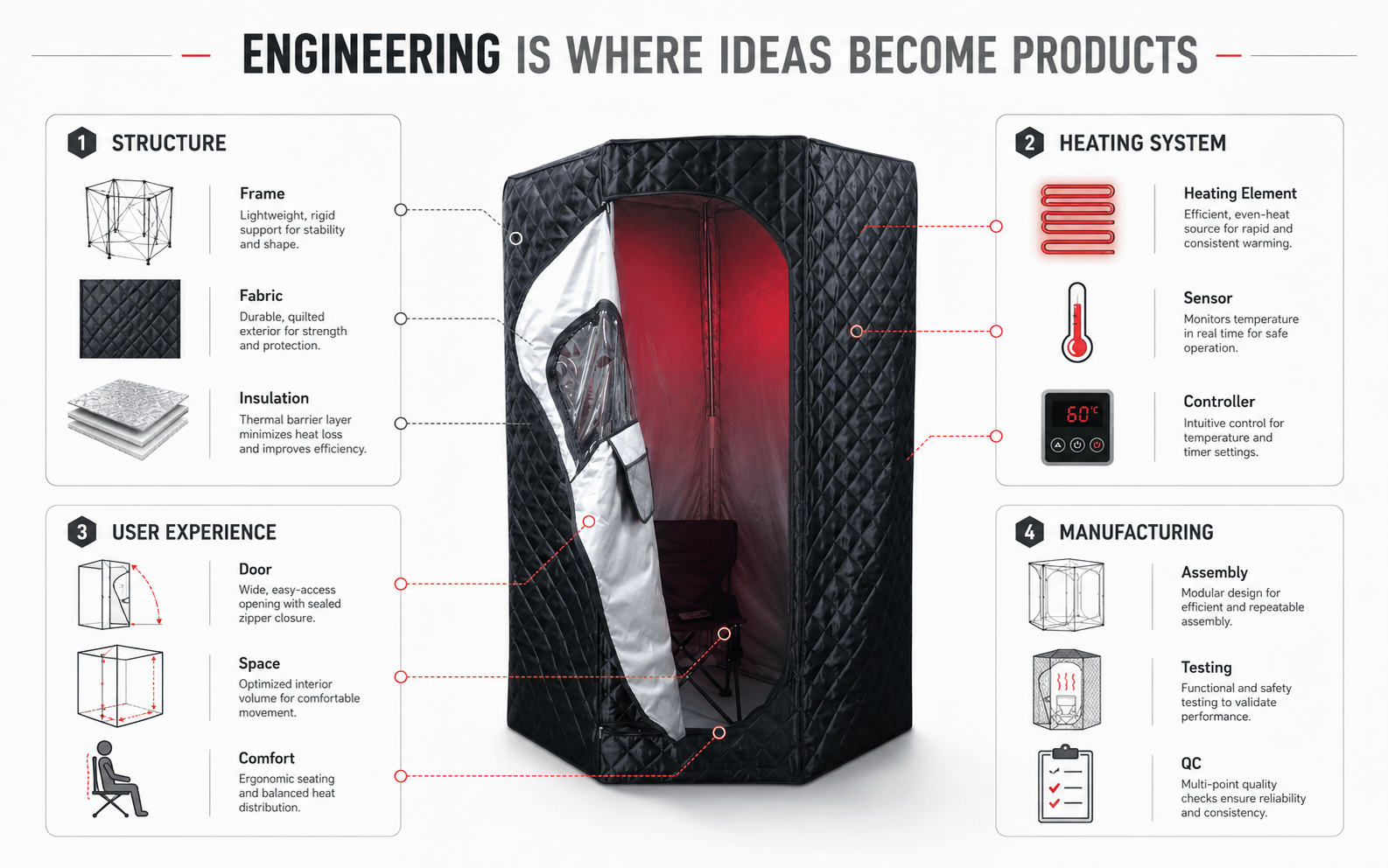
Once the product direction is defined, engineering transforms concepts into physical solutions.
For portable recovery equipment, engineering considerations often include:
Portable products must balance:
A structure that looks good in a rendering must also perform through repeated daily use.
Recovery products often depend heavily on temperature performance.
For sauna products, development may involve:
For cold plunge systems:
The goal is not simply achieving an extreme specification.
The goal is creating a reliable user experience.
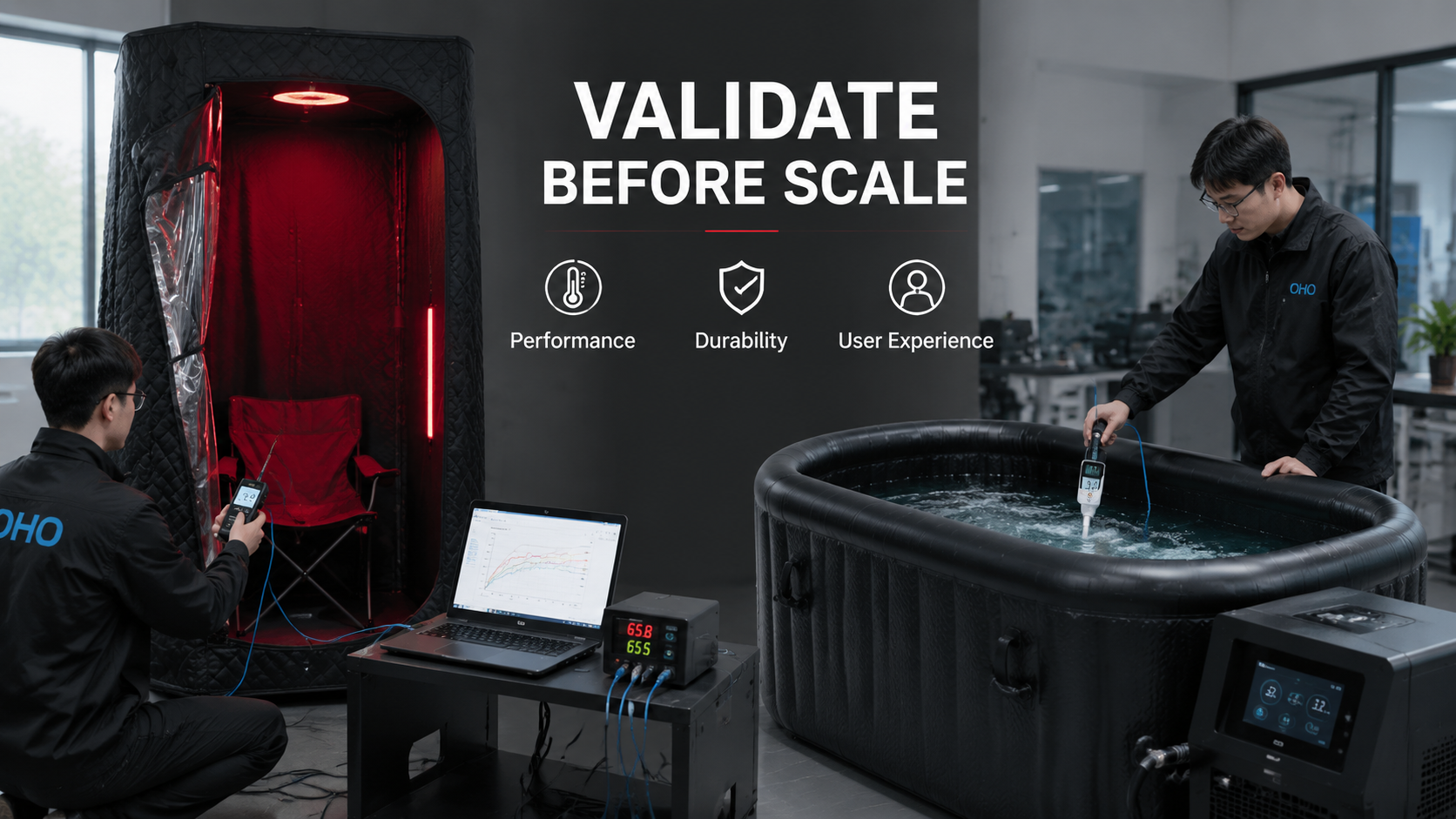
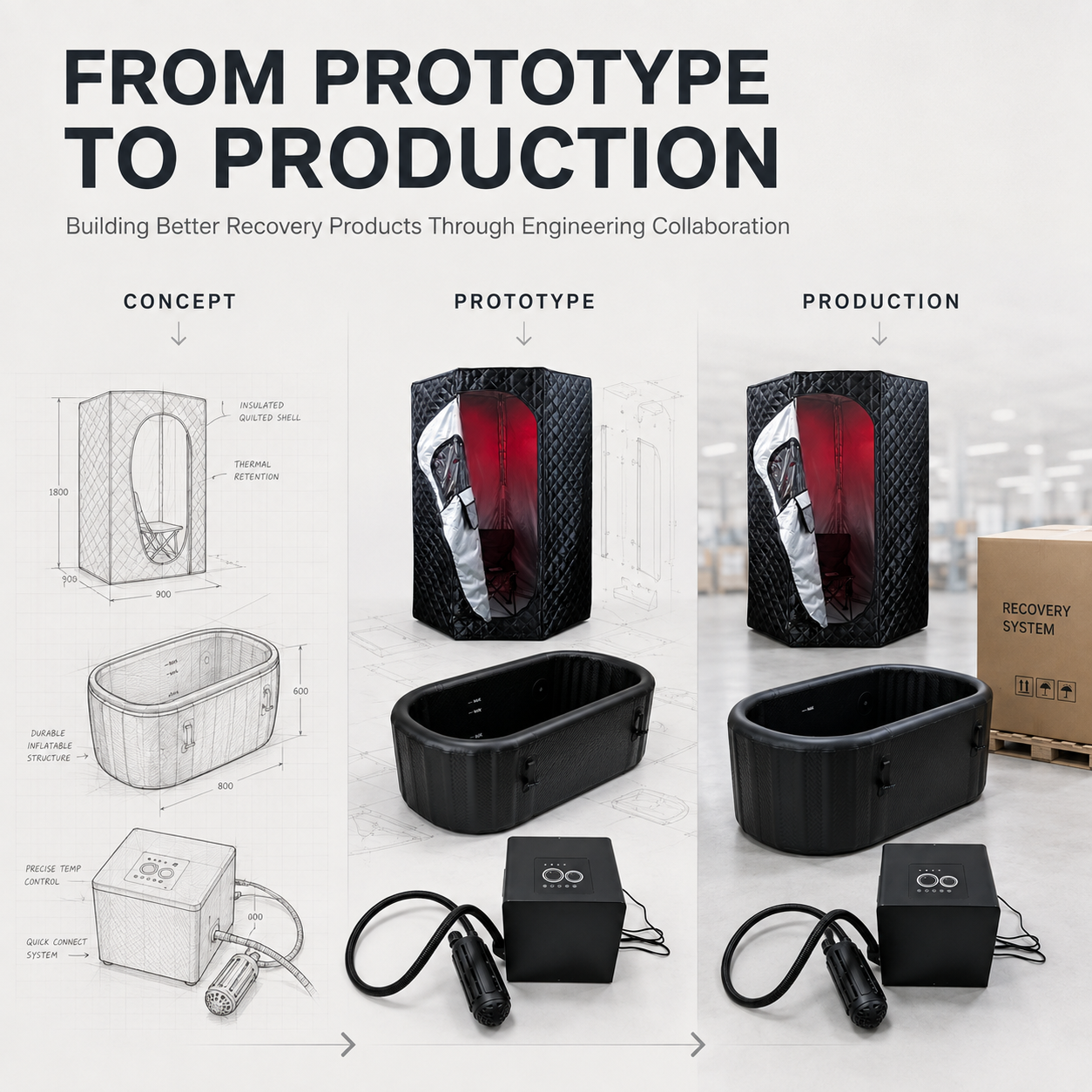
A prototype is not only a sample for approval.
It is a learning tool.
Before production begins, prototypes help identify:
For example:
A portable sauna prototype may reveal:
A cold plunge prototype may reveal:
Early validation reduces the risk of expensive changes after production begins.
A successful prototype does not automatically become a successful commercial product.
Mass production introduces a new challenge:
Consistency.
A manufacturing partner must be able to maintain:
This requires more than production equipment.
It requires:
Clear production standards.
Incoming material checks, assembly inspection and final testing.
Reliable material and component supply.
Stable lead times and capacity management.
For growing brands, manufacturing capability directly affects customer satisfaction and brand reputation.
Many companies focus heavily on launching the first batch.
However, long-term success depends on what happens after customers receive the product.
A mature product development process considers:
Can key components be replaced?
Examples:
Can customers easily understand:
Can the product platform support future improvements?
A strong product architecture allows brands to:
A product should not only succeed at launch.
It should have room to grow.
A manufacturing partner is not simply a place where products are assembled.
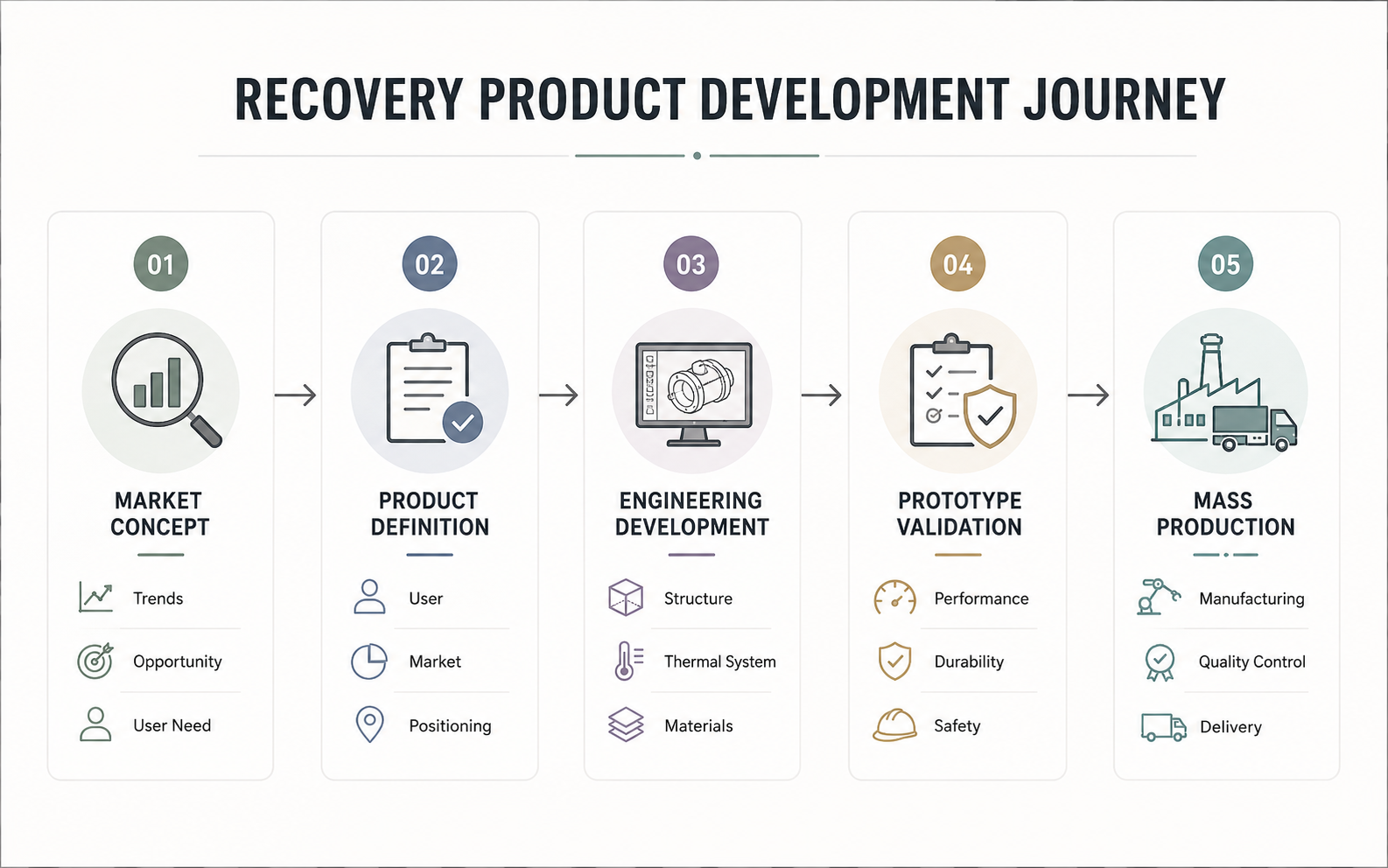
The right partner contributes throughout the entire journey:
From:
Concept discussion
↓
Product definition
↓
Engineering development
↓
Prototype validation
↓
Mass production
↓
Quality improvement
↓
Market expansion
The best partnerships happen when both sides contribute knowledge.
The brand understands:
The manufacturing partner contributes:
Together, they create products that are not only possible to produce, but meaningful in the market.
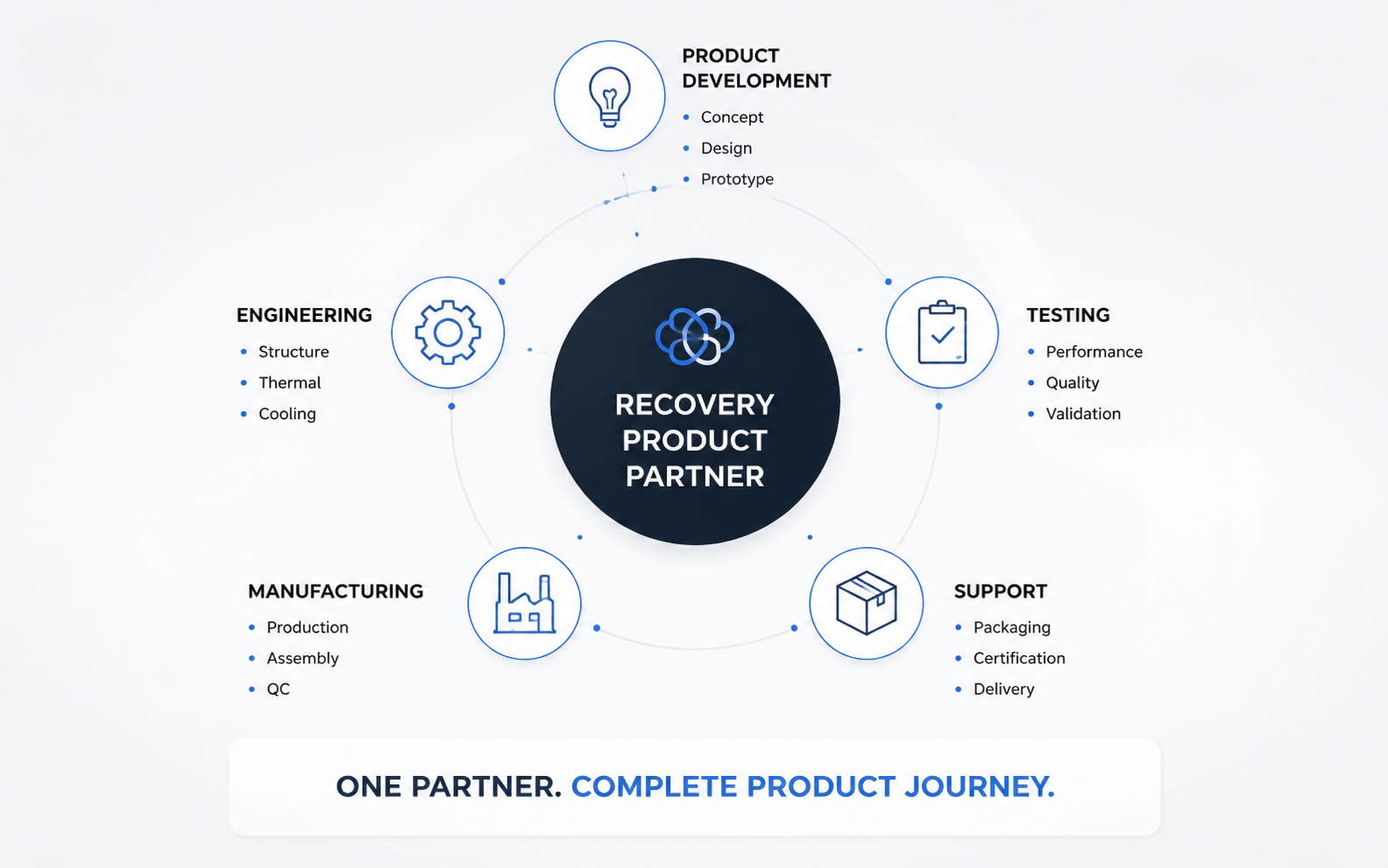
The future of recovery equipment will not be defined only by more features or higher specifications.
It will be defined by products that better understand:
For brands entering the recovery market, the journey from prototype to production requires more than a supplier.
It requires a partner who understands how products are developed, validated and scaled.
At OHO, we support recovery brands through the complete product development process — from initial concept and engineering development to prototype testing, manufacturing and global delivery.
Whether developing portable sauna solutions, cold plunge systems or integrated recovery products, our goal is to help brands create reliable products built for long-term market success.
From concept to production, better products begin with better collaboration.

 EN
EN