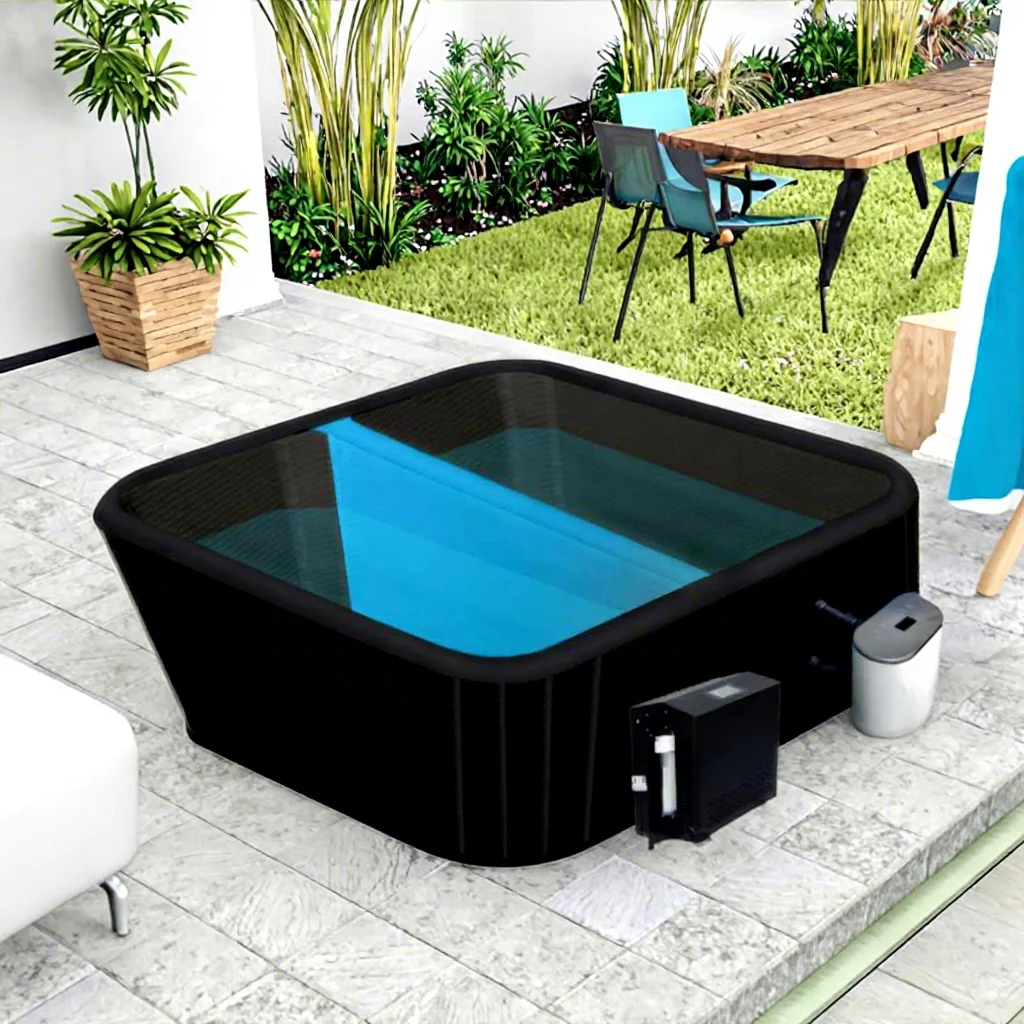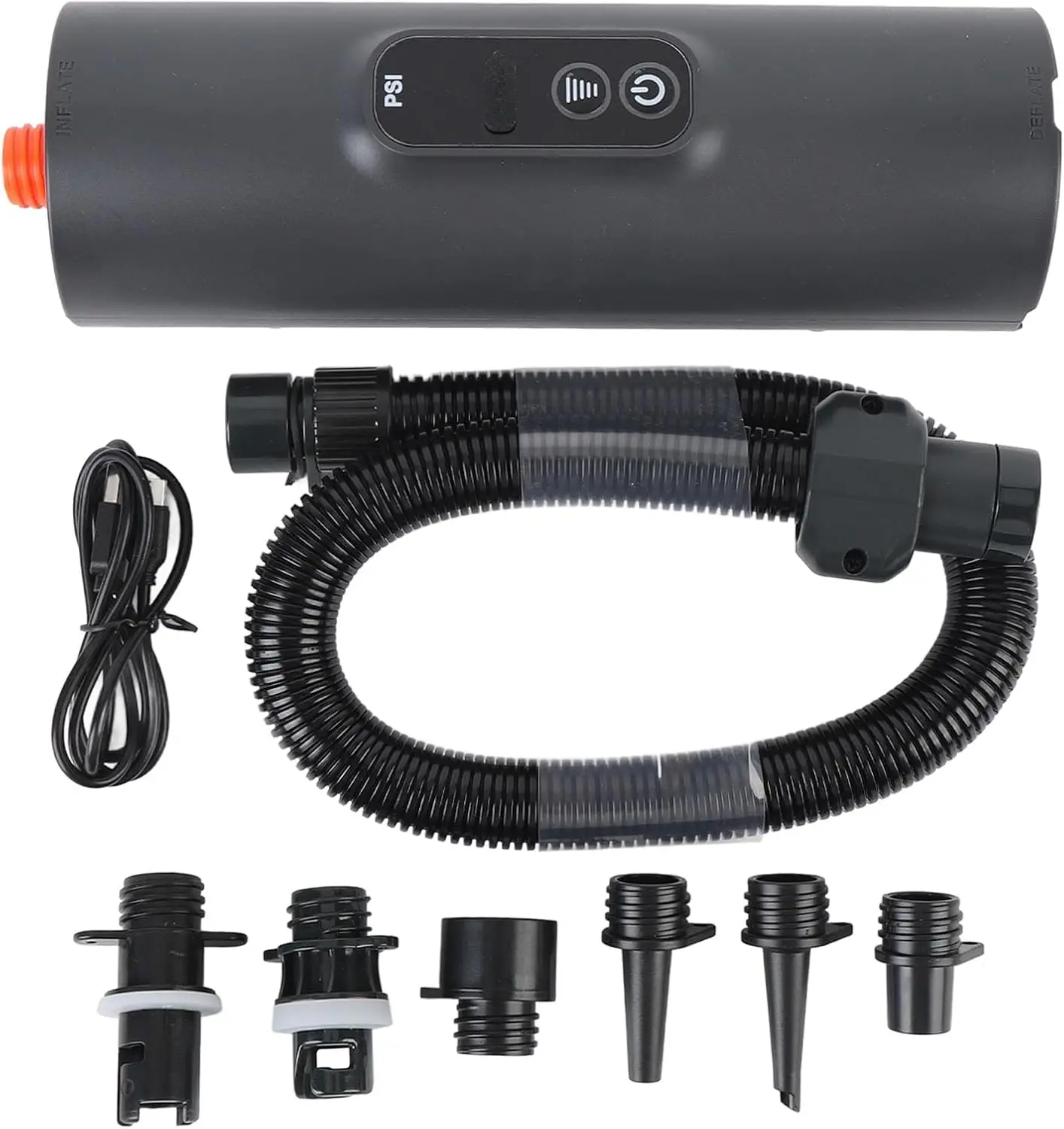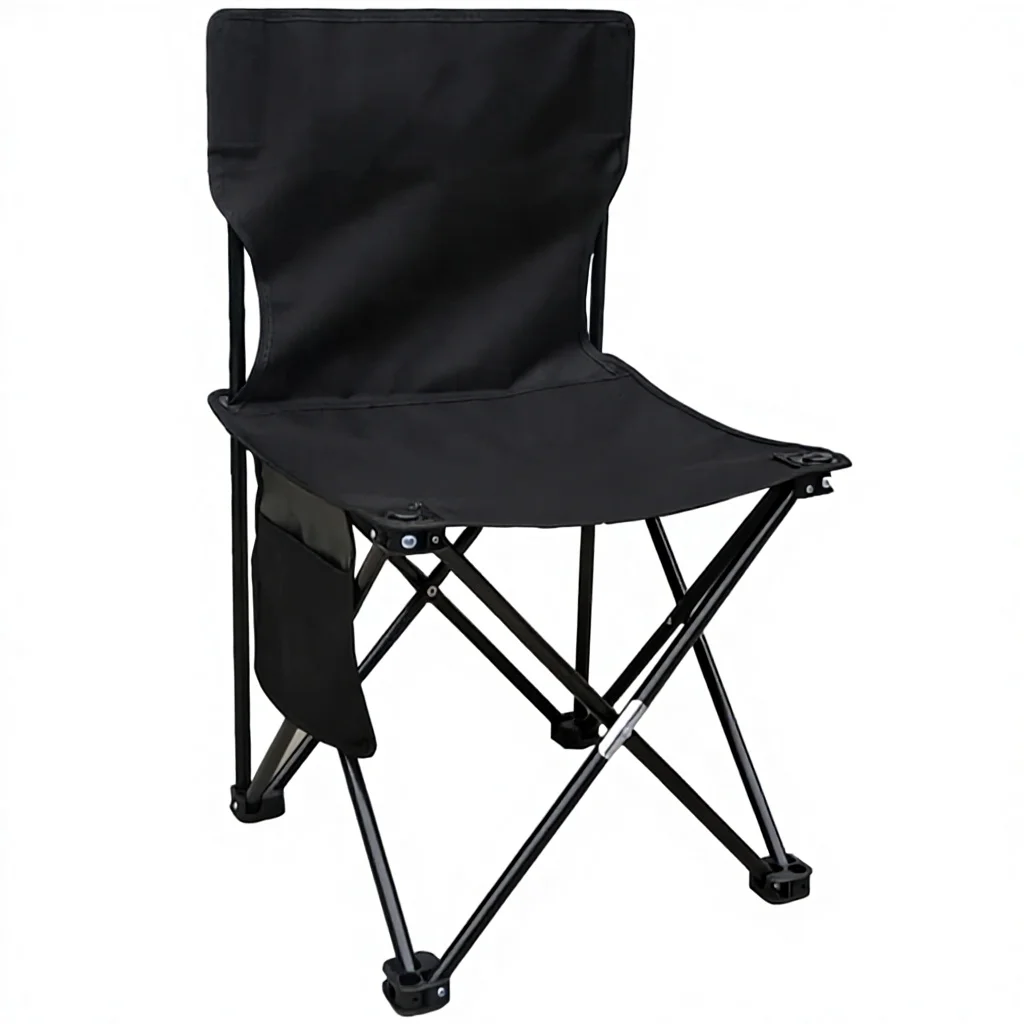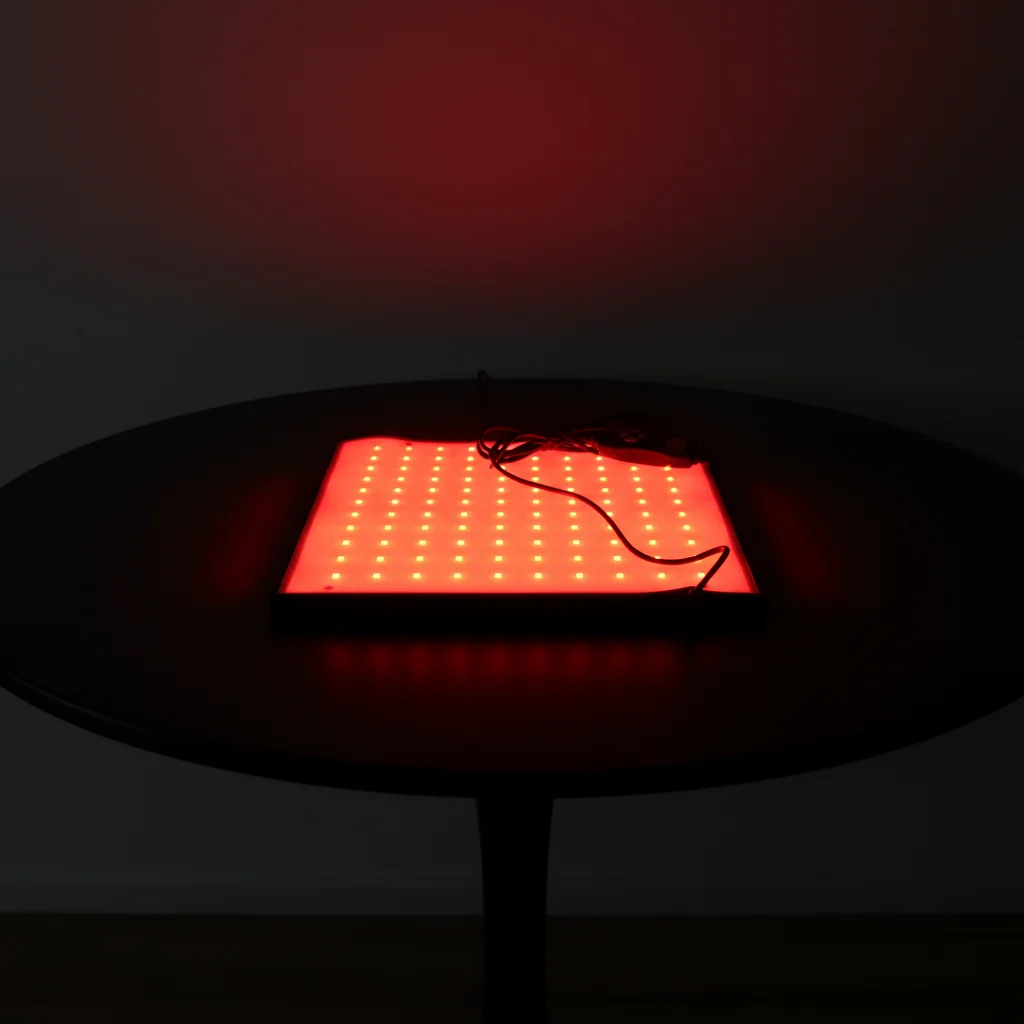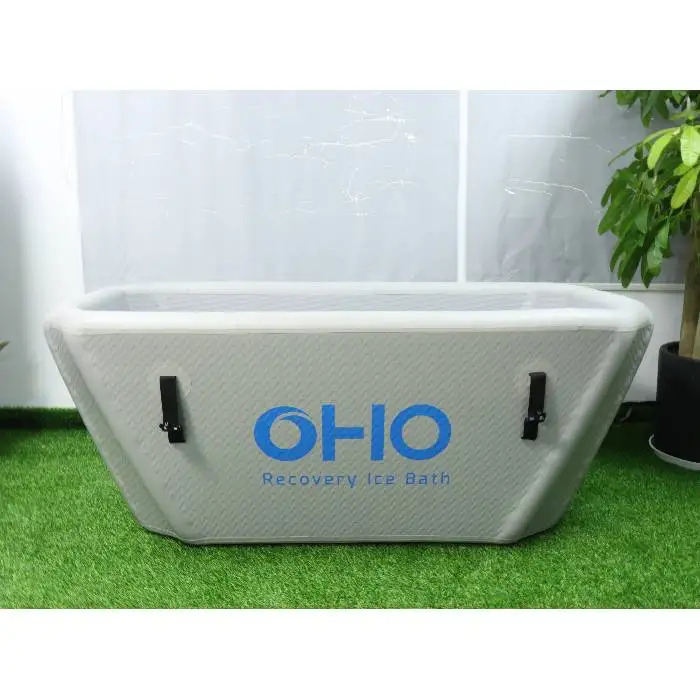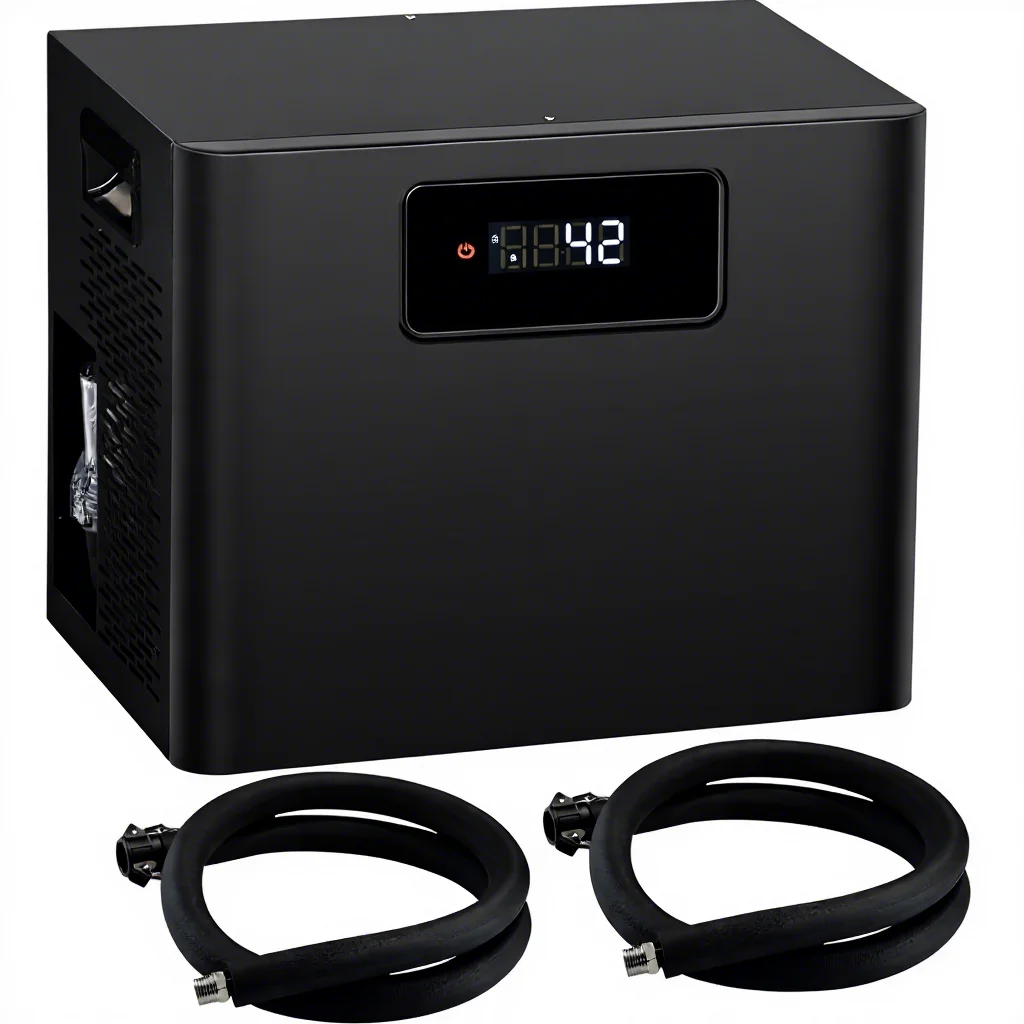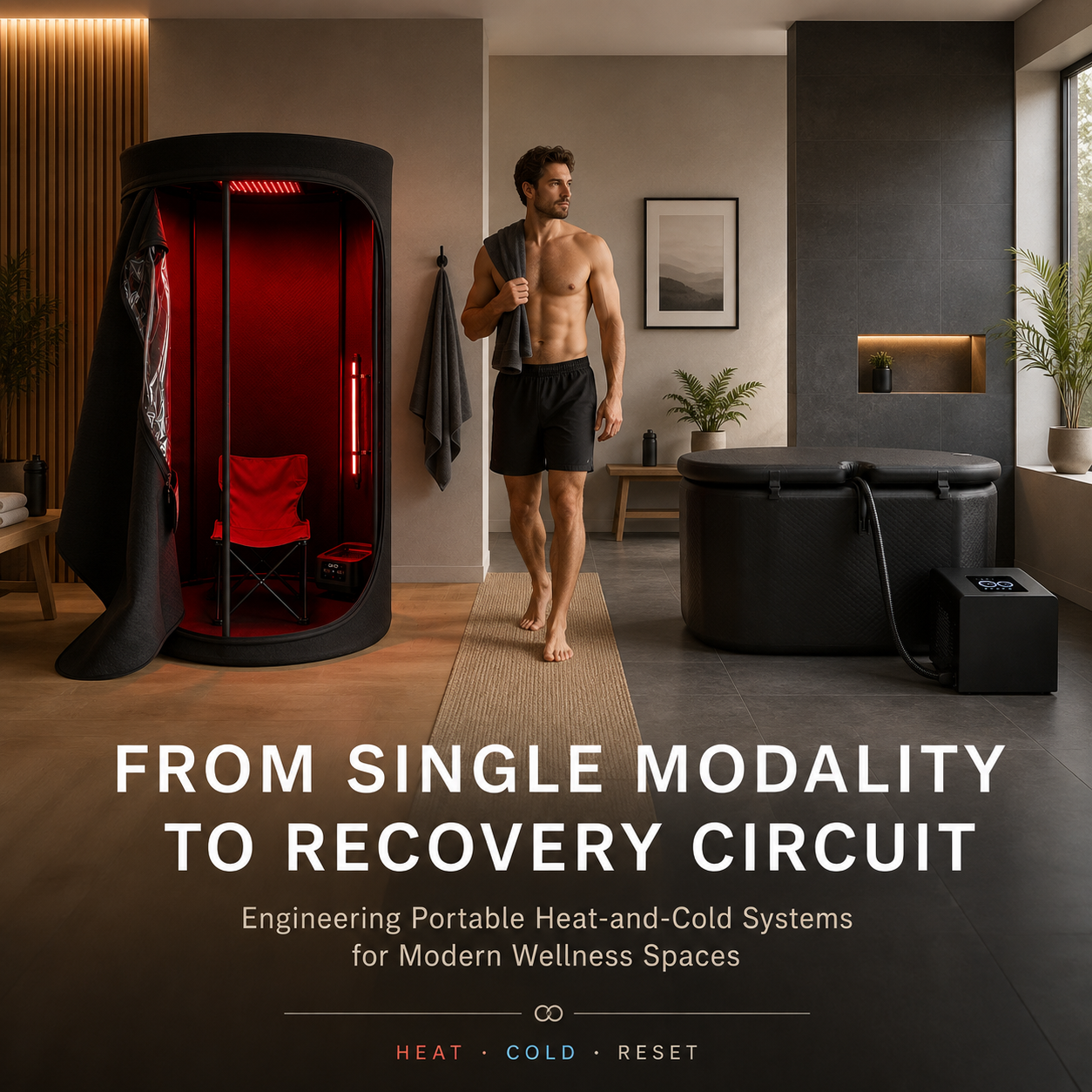
The wellness market is gradually moving beyond individual sauna and cold-plunge products.
In its 2026 Hydrothermal Initiative trends, the Global Wellness Institute describes a shift “from Sauna Boom to Hydrothermal Circuits”—toward environments that combine heat, cold, water, rest and structured experiences rather than treating each feature as an isolated amenity.
For portable recovery products, this creates an interesting opportunity.
A permanent spa may rely on built-in sauna rooms, fixed plunge pools, dedicated drainage and extensive mechanical systems. A portable system can approach the same basic heat-and-cold journey with much less permanent construction.
But portability does not mean simply putting a sauna tent next to an ice bath.
A well-designed portable recovery circuit has to work as one system.
This paper focuses on that engineering question. It does not prescribe medical treatment, specific heat/cold exposure times or a universal recovery protocol.
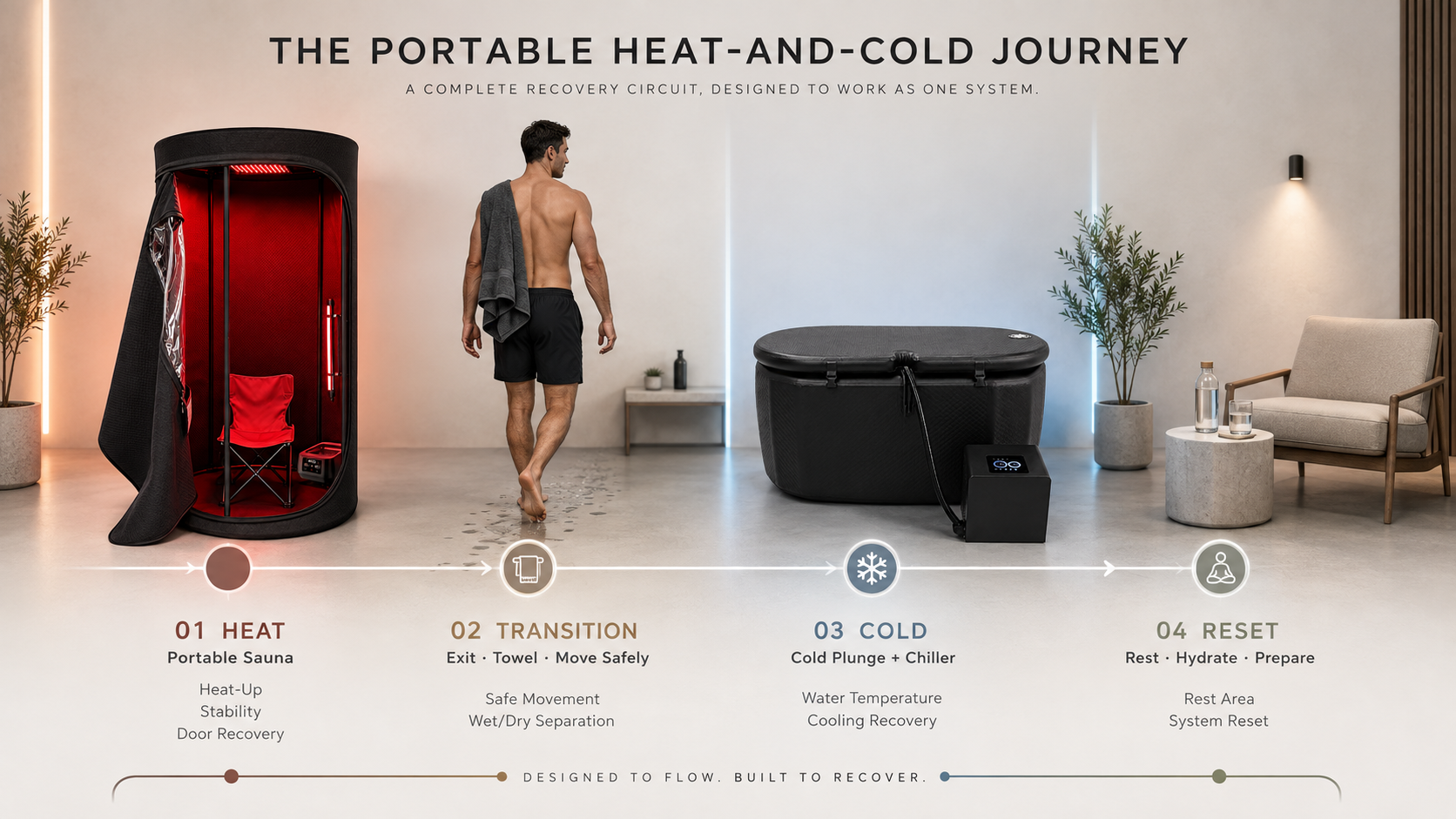
For this paper, a recovery circuit means a coordinated setup built around three core stages:
HEAT → COLD → RESET
The equipment may include:
OHO's current product platform already spans portable infrared and heated sauna tents, portable ice baths, chillers and combined sauna-and-ice-bath solutions.
The important shift is this:
The products should no longer be evaluated only as separate units.
Once combined, the performance of one component affects how the complete experience works.
A common development mistake is to begin with:
Which sauna should we use?
Which chiller should we use?
A better first question is:
Who is going to use the system, where, and how often?
A one-person home setup creates very different requirements from a recovery zone serving multiple gym members throughout the day.
Typical priorities may include:
A portable infrared sauna paired with an insulated plunge and appropriately sized chiller may fit this positioning well.
The priorities may shift toward:
A high-temperature hot-air sauna may be a stronger fit here.
The system must be considered differently again.
Instead of asking whether one user can complete a session, the operator needs to think about:
The same product specification should not automatically be used for all three environments.
A recovery circuit is only as practical as its weakest component.
Imagine that the sauna can accept a new user every 20 minutes, but the cold plunge takes much longer to recover after repeated use.
The plunge becomes the bottleneck.
The opposite can also happen.
A chiller may easily maintain the plunge temperature, while repeated opening of the sauna door causes the heat environment to recover slowly.
The sauna then becomes the bottleneck.
The objective is not to choose the highest-temperature sauna and the highest-horsepower chiller.
It is to create a balanced system.
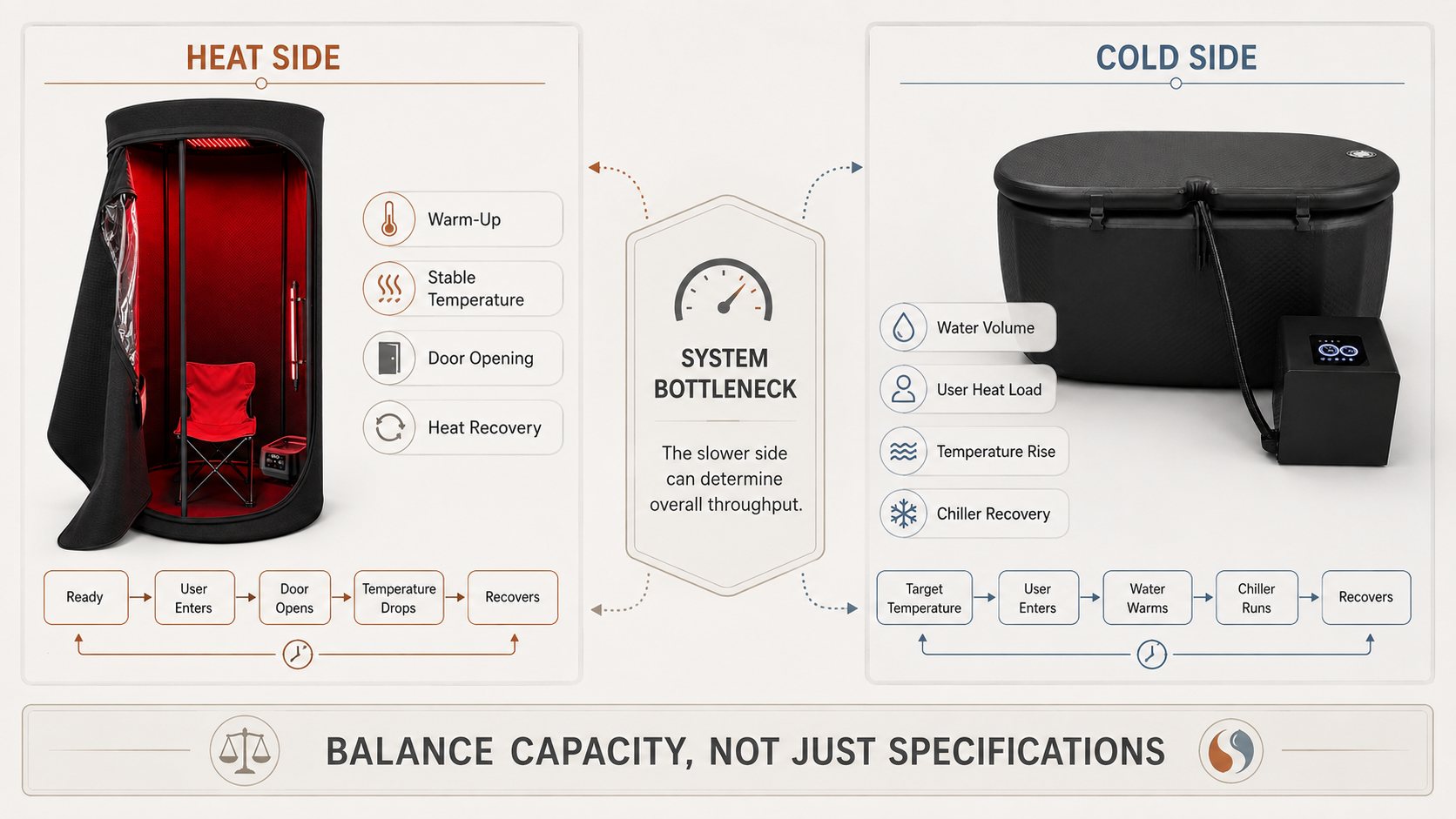
Standalone product testing often focuses on maximum performance:
How hot can the sauna get?
How cold can the plunge get?
In a recovery circuit, another metric becomes important:
How quickly can the system return to its intended operating condition after use?
Opening a portable sauna releases heated air.
A useful test can record:
For a multi-user environment, this can be more useful than knowing the absolute maximum empty-tent temperature.
A user entering a cold plunge adds heat to the water.
Repeated use increases the load on the cooling system.
Important variables include:
For commercial or semi-commercial applications, the question is not simply:
Can the chiller reach 5°C?
It is:
Can it keep the system near the intended temperature as people actually use it?
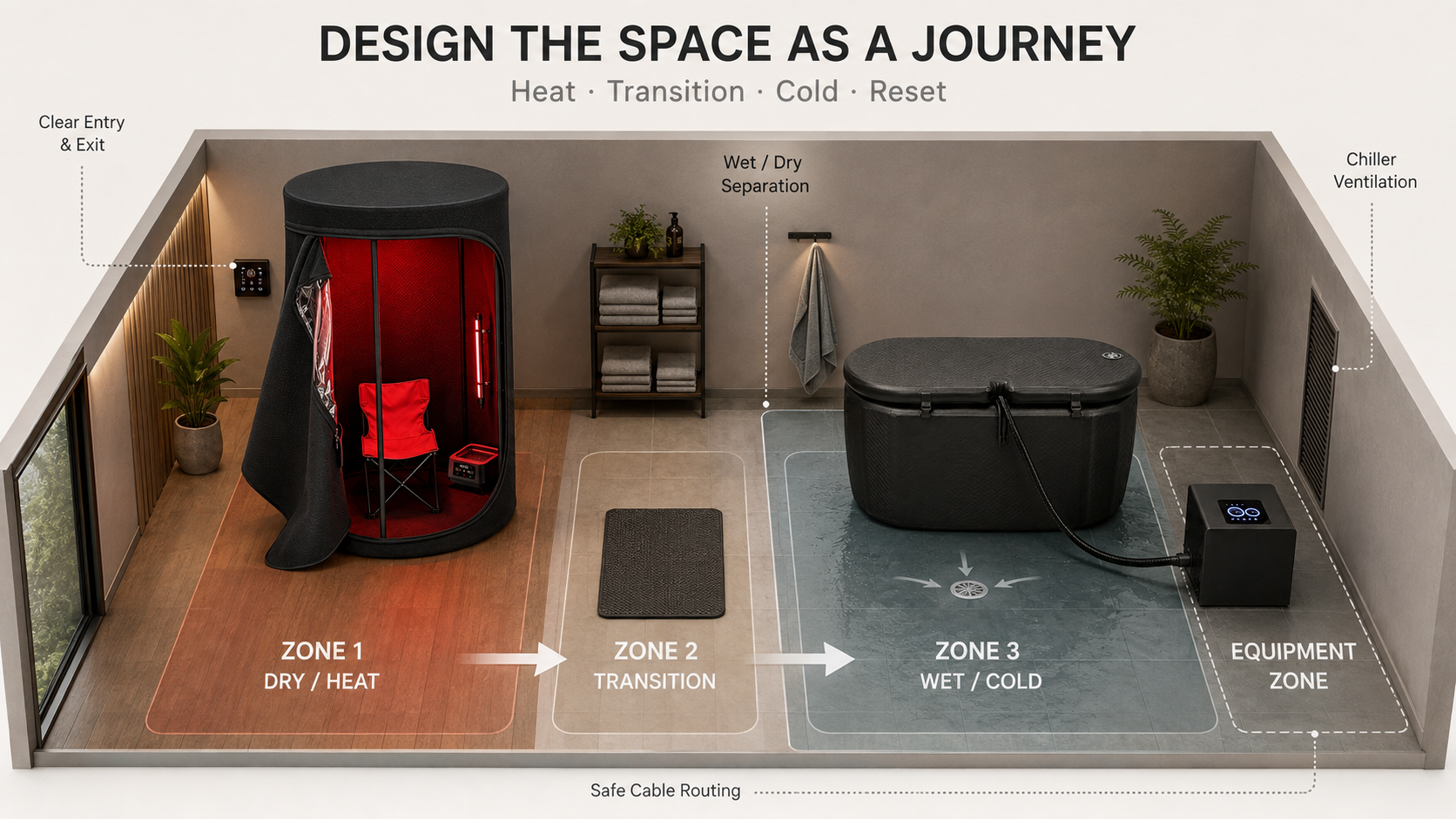
Portable equipment gives brands more flexibility because the layout does not need to be permanently built into the property.
But the equipment still needs a clear spatial logic.
A simple circuit might look like:
SAUNA → TRANSITION → COLD PLUNGE → REST
The transition zone is easy to underestimate.
Users may need space to:
As a practical design principle:
Sauna controls, electrical connections and the chiller should not be treated as part of the splash zone.
The exact electrical and installation requirements depend on the final products and destination market, but spatial separation makes both user behaviour and equipment management easier.
A portable recovery circuit may create:
Suitable flooring, drainage planning and slip resistance can be as important to the real experience as the sauna or plunge itself.
Portable equipment offers several advantages over permanent installations.
It can allow brands and operators to:
But portability introduces its own design questions.
How many parts must the user assemble?
Where do the sauna, tub, hoses and accessories go when not in use?
Can users clearly identify electrical, water and control connections?
Will the structure tolerate regular assembly, folding and transport?
If one component fails, can it be replaced without replacing the entire system?
A portable circuit should therefore be designed not only for first use, but for repeated ownership.
Once a cold plunge becomes part of a regular recovery circuit, the water system deserves the same attention as the cooling system.
Cooling, circulation, filtration and water treatment are different functions.
A chiller may cool water effectively without filtering it.
A filter may remove particles without providing microbial control.
A UV or other treatment module also has its own operating conditions.
Brands therefore need to decide early whether the product is intended for:
This decision influences the choice of:
The right solution is not necessarily the most complicated one.
It is the one that matches actual use.
A recovery circuit can easily become a competition of specifications:
Hotter sauna.
Colder plunge.
Larger chiller.
More power.
But the 2026 hydrothermal trend is moving toward broader, intentionally designed thermal experiences rather than simply maximizing individual modalities.
For product development, that means asking different questions.
Instead of:
Can the sauna reach the highest temperature?
Ask:
Can it deliver the intended heat consistently and recover after normal use?
Instead of:
Can the plunge reach the lowest possible temperature?
Ask:
Can it maintain the target condition for the intended user pattern?
Instead of:
How many technologies can we add?
Ask:
Does each technology have a clear role in the experience?
Balanced performance is more useful than specification overload.
There is no single correct heat-and-cold system.
A brand can develop different circuits for different audiences.
| Concept | Heat Side | Cold Side | Main Priority |
|---|---|---|---|
| Home Wellness | Portable infrared sauna | Compact insulated plunge + chiller | Comfort, appearance, simple ownership |
| Performance Recovery | High-temperature heated sauna | Larger plunge + higher-capacity cooling system | Strong thermal experience and faster recovery |
| Flexible Studio | Portable sauna platform | Modular plunge, chiller and water-management system | Throughput, maintenance and replaceability |
This is why product architecture should follow market positioning rather than the other way around.
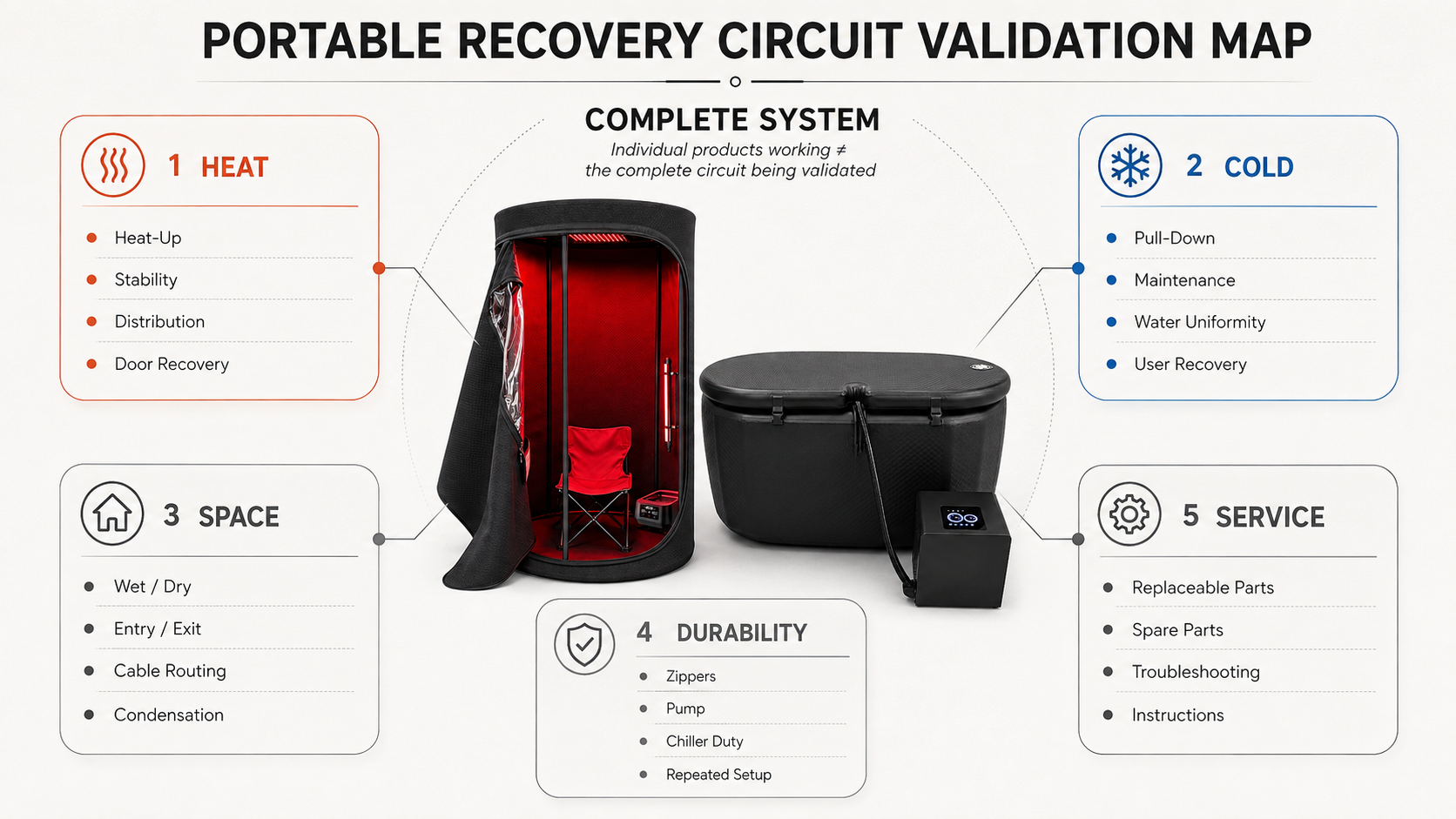
Before selling a combined portable heat-and-cold system, test the system as a system.
At minimum, consider validating:
A combined system should not be considered validated simply because each component works independently.
Before choosing a portable recovery circuit, ask:
These seven questions often reveal more than comparing product specification sheets alone.
Portable sauna and cold plunge products are becoming more than separate pieces of equipment.
When they are designed together, the development question changes from:
Which sauna and which plunge should we sell?
to:
What complete heat-and-cold experience are we trying to create?
A successful portable recovery circuit balances:
Portability makes this type of system more accessible to homes, gyms, studios and flexible wellness spaces—but only when the products are engineered to work together.
The future opportunity is therefore not necessarily to make every product hotter, colder or more complicated.
It is to make the whole system more coherent.
OHO develops portable infrared and heated sauna tents, cold plunge tubs, chillers and combined heat-and-cold product solutions for brand partners.
A new recovery-system project can be defined around:
Rather than starting with individual specifications, the development process can begin with one question:
What should the complete user experience look like?

 EN
EN