
When choosing a portable sauna, temperature is often one of the first specifications customers look at.
Many buyers ask:
“Can a portable sauna really reach high temperatures?”
“Why does my thermometer show a lower number than expected?”
“Does a lower temperature mean the sauna is not working properly?”
The answer is more complex than a single temperature number.
A sauna’s actual heating experience depends on multiple factors, including room temperature, thermometer position, and whether someone is inside the sauna.
Understanding these factors helps you evaluate sauna performance more accurately and enjoy a better wellness experience.
Temperature specifications are usually measured under controlled testing conditions.
However, real-life home environments are different.
A portable sauna placed in a warm indoor room will perform differently from one placed in a cold garage during winter.
The same heater can produce different temperature readings depending on:
This does not mean temperature numbers are unreliable.
It means temperature must be measured under consistent conditions to provide meaningful comparisons.
One of the most overlooked factors affecting portable sauna temperature is the surrounding room temperature.
A heater does not work in isolation.
It must heat both:
When the room temperature is higher, the sauna starts from a warmer baseline and loses less heat to the outside environment.
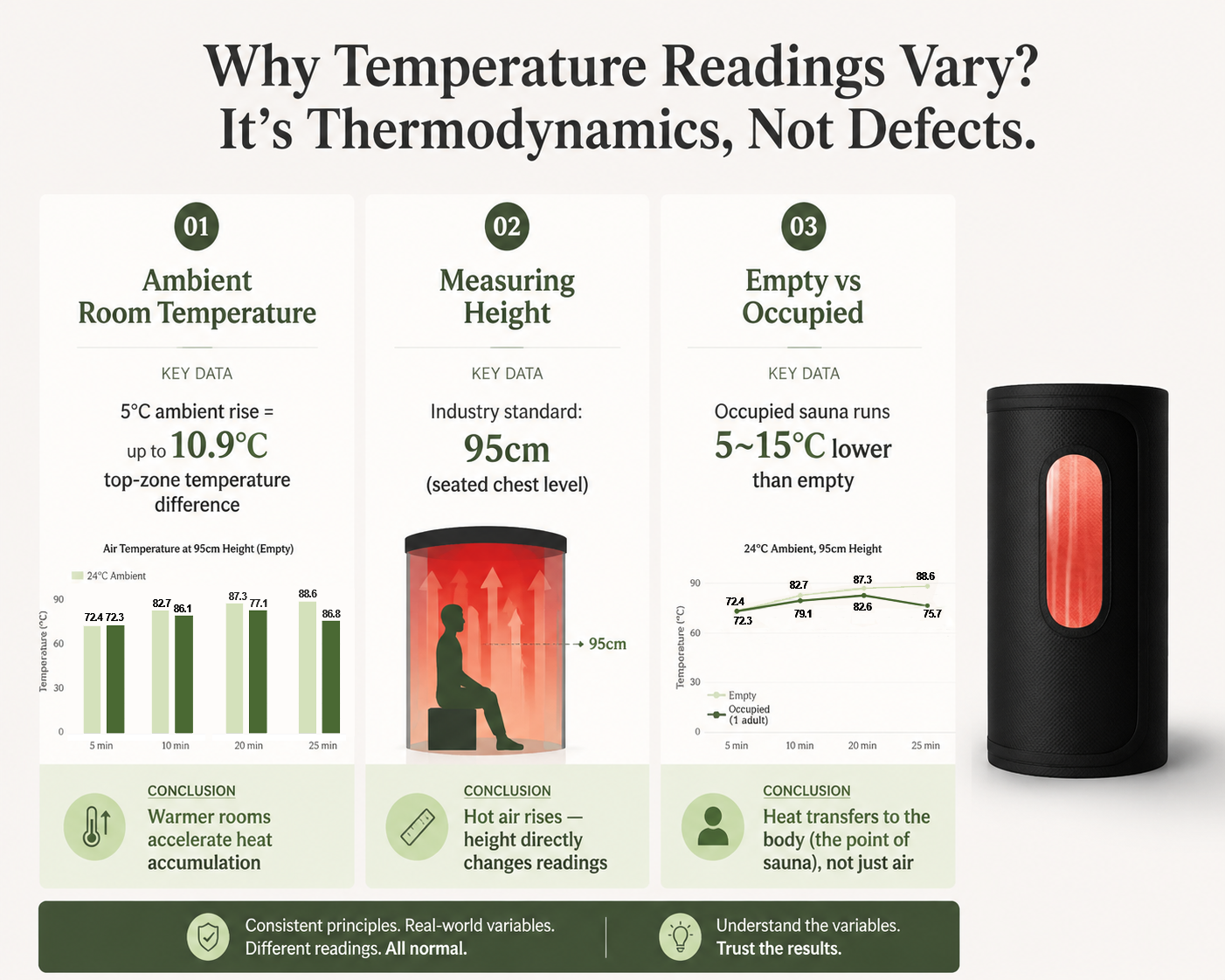
Testing shows that under the same heating time and heater power, increasing ambient temperature from 24°C to 29°C can create a temperature difference of more than 10°C in the upper area of the sauna.
For more accurate testing:
Heat naturally rises.
Because warm air is lighter than cold air, portable saunas usually have a vertical temperature difference.
The temperature near the ceiling will be higher than the temperature near the floor.
For example:
For meaningful testing, the thermometer should be placed around 95 cm above the ground, which represents approximately seated chest height.
This measurement position provides a better reference for what users actually feel during a sauna session.
This is one of the most misunderstood aspects of sauna performance.
Many users expect:
“More heat inside should always mean a higher temperature reading.”
However, when a person enters the sauna, the human body becomes part of the heat system.
The body contains a large amount of water and absorbs heat continuously.
The heater is now warming:
Because of this heat transfer, the air temperature may stabilize at a lower level compared with an empty sauna.
Testing shows that an empty sauna can exceed 85°C, while an occupied sauna may stabilize approximately 5–15°C lower depending on conditions.
This is not a sign of poor performance.
It is actually evidence that heat energy is transferring into the user's body — which is the purpose of sauna therapy.
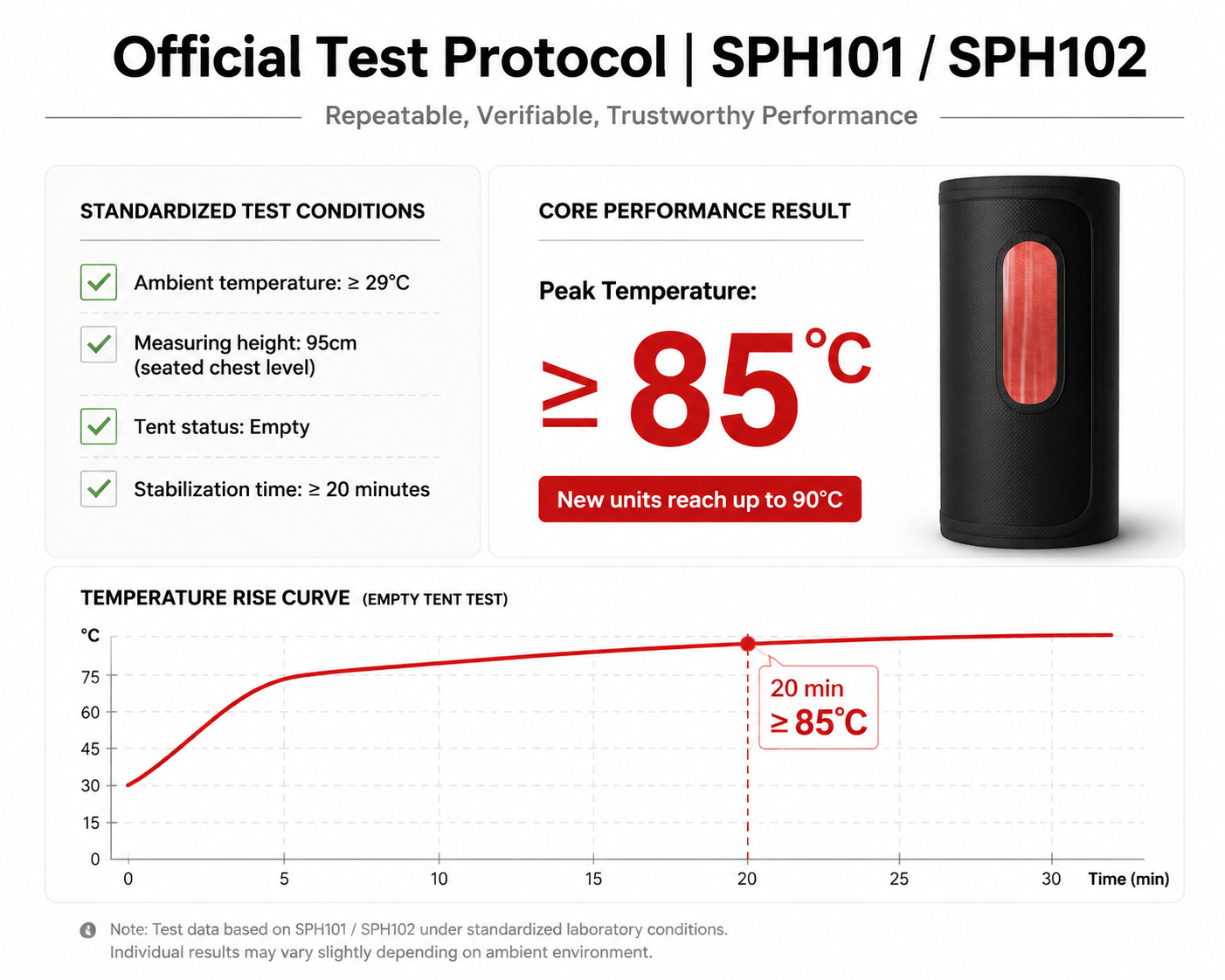
To compare sauna temperature performance fairly, follow standardized testing conditions.
Recommended testing setup:
|
Testing Item |
Recommended Condition |
|
Room Temperature |
≥29°C |
|
Thermometer Position |
95 cm height |
|
Sauna Status |
Empty |
|
Heating Time |
At least 20 minutes |
When sharing temperature results, always include:
Transparent testing creates better understanding and more trustworthy product information.
At OHO Recovery, we believe better wellness products start with better understanding.
A portable sauna is not only about reaching a certain temperature number.
It is about creating a consistent, comfortable, and effective heat experience at home.
That is why we continue improving:
Our goal is simple:
To help more people enjoy accessible recovery and wellness experiences wherever they live.
A portable sauna’s temperature depends on heater power, environment, and testing conditions. A properly tested portable sauna may reach high temperatures in controlled conditions, while real-world occupied use may show lower air temperature.
Temperature readings can change depending on room temperature, thermometer placement, and whether someone is inside the sauna.
No. When a person enters the sauna, the body absorbs heat, which can reduce air temperature while still creating an effective warming experience.
Understanding sauna temperature is the first step toward a better wellness experience.
Instead of focusing only on one number, consider the complete picture:
At OHO Recovery, we are committed to providing transparent information and continuously improving portable wellness solutions for modern homes.

 EN
EN